Strategic Vulnerability Grid: Odisha, Chhattisgarh, Madhya Pradesh and Uttar Pradesh Face Highest Early Kharif Crop Failure Risk
CareEdge Ratings' Strategic Vulnerability Grid highlights Odisha, Chhattisgarh, Madhya Pradesh, and Uttar Pradesh as the most vulnerable states for early-stage Kharif crop failure. Learn what this means for farmers, agribusinesses, policymakers, and the future of climate-resilient agriculture in Bharat.
Strategic Vulnerability Grid: Odisha, Chhattisgarh, Madhya Pradesh and Uttar Pradesh Face Highest Early Kharif Crop Failure Risk
Introduction
India's agricultural economy remains heavily dependent on the performance of the southwest monsoon. While advances in irrigation, forecasting, and farm technology have improved resilience, large sections of the farming community continue to face significant climate-related risks.
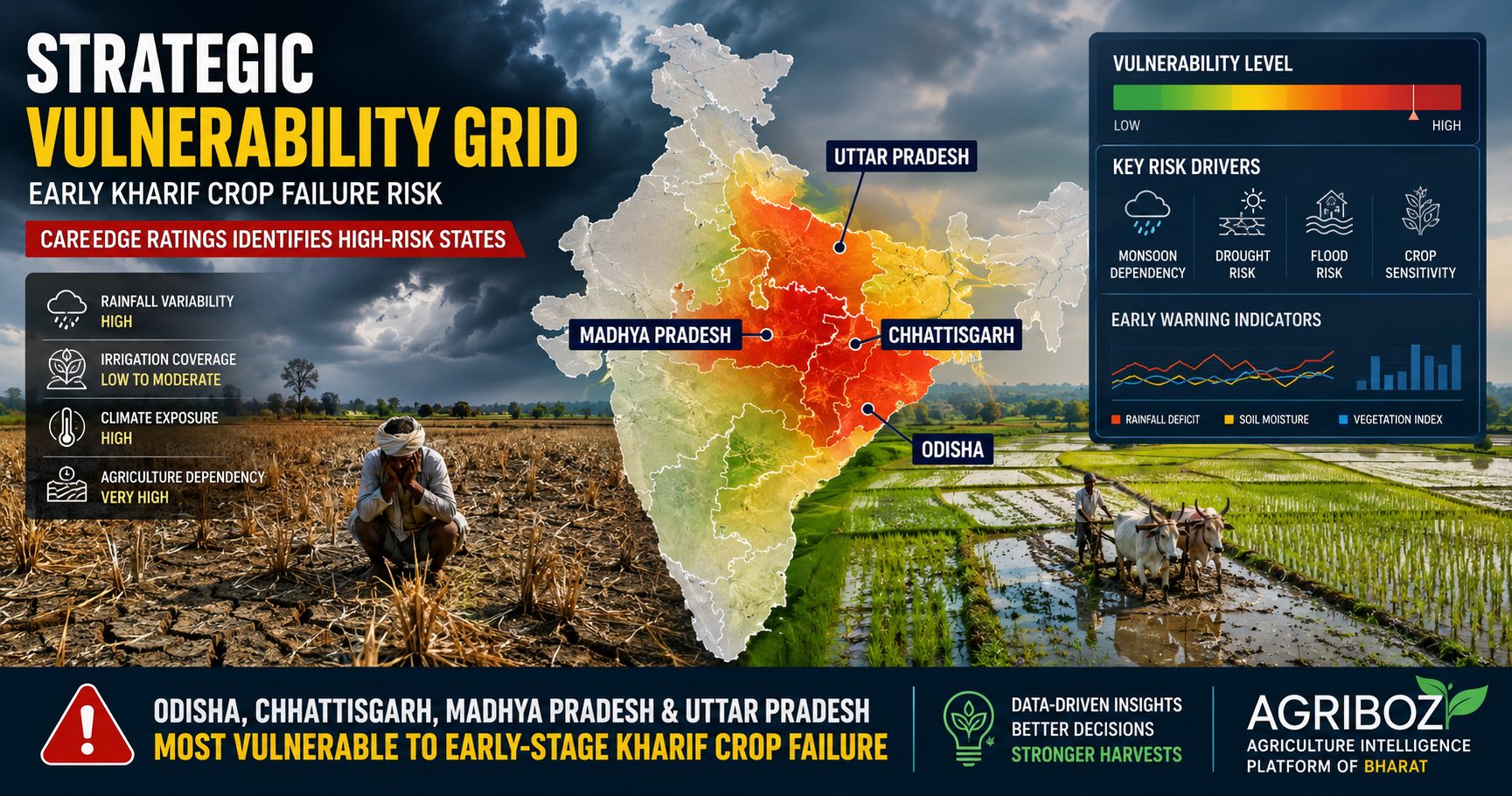
According to the Strategic Vulnerability Grid released by CareEdge Ratings, Odisha, Chhattisgarh, Madhya Pradesh, and Uttar Pradesh have emerged as the states with the highest exposure to early-stage Kharif crop failure. This assessment raises important concerns for farmers, agribusinesses, lenders, insurers, and policymakers.
Understanding these vulnerabilities is essential for preparing timely interventions and protecting farm incomes.
What Is the Strategic Vulnerability Grid?
Understanding Agricultural Risk Mapping
The Strategic Vulnerability Grid is designed to identify regions with elevated exposure to agricultural disruptions. The framework evaluates factors such as:
- Rainfall dependency
- Irrigation coverage
- Crop sensitivity
- Historical weather variability
- Agricultural productivity patterns
- Exposure to climate shocks
The objective is to identify regions where crop losses could occur rapidly during the early stages of the Kharif season.
Why Early-Stage Crop Failure Matters
Early-stage crop failure can have cascading consequences:
- Reduced farm income
- Increased debt burden
- Lower rural consumption
- Supply chain disruptions
- Food inflation pressures
- Increased dependence on government support
When crops fail during germination or early vegetative growth, farmers often face re-sowing costs that significantly increase production expenses.
Why These Four States Are Highly Vulnerable
Odisha
Odisha remains highly dependent on monsoon rainfall for crop establishment. Variability in rainfall distribution can affect paddy cultivation, especially during sowing and transplantation stages.
Challenges include:
- Uneven rainfall patterns
- Flood and drought cycles
- Limited irrigation coverage in several districts
- High dependence on smallholder farming
Chhattisgarh
Known as the "Rice Bowl of Central India," Chhattisgarh has extensive paddy cultivation areas that remain vulnerable to delayed or deficient rainfall.
Key concerns include:
- Rainfed agricultural systems
- High monsoon dependency
- Limited crop diversification
- Weather-related yield fluctuations
Madhya Pradesh
Madhya Pradesh is a major producer of soybean, pulses, and cereals. Delayed rainfall or moisture stress during sowing can significantly impact crop establishment.
Risk factors include:
- Large rainfed cultivation areas
- Rising weather variability
- Soil moisture challenges
- Dependence on timely monsoon onset
Uttar Pradesh
As one of India's largest agricultural states, Uttar Pradesh contributes significantly to food grain production.
Areas of concern include:
- Regional rainfall disparities
- High population pressure on agriculture
- Groundwater stress in some regions
- Vulnerability of small and marginal farmers
The Bigger Challenge: Climate Variability
Agriculture Is Entering a New Risk Era
Traditional weather patterns are becoming less predictable. Farmers increasingly face:
- Delayed monsoons
- Intense rainfall events
- Longer dry spells
- Heat stress conditions
- Changing pest and disease dynamics
These changes make conventional farming calendars less reliable.
Impact on Farm Economics
Climate-driven crop failures affect more than production.
They influence:
- Rural employment
- Agri-input demand
- Credit repayment capacity
- Crop insurance claims
- Agricultural investments
This makes climate intelligence a strategic necessity rather than an optional tool.
How Farmers Can Reduce Early Kharif Risks
Diversified Cropping Systems
Growing multiple crops reduces dependency on a single source of income and lowers overall risk exposure.
Climate-Smart Agriculture
Adoption of climate-smart practices can improve resilience:
- Soil moisture conservation
- Mulching
- Precision nutrient management
- Water-efficient irrigation
- Improved seed selection
Weather-Based Decision Making
Real-time weather intelligence helps farmers:
- Optimize sowing dates
- Reduce input losses
- Improve irrigation scheduling
- Respond quickly to weather threats
Crop Insurance and Risk Management
Insurance coverage can help reduce financial shocks resulting from weather-induced crop losses.
Farmers should evaluate available risk protection schemes before each cropping season.
The Role of Agricultural Intelligence Platforms
Data-Driven Farming Is Becoming Essential
Modern agriculture increasingly depends on timely intelligence.
Farmers need access to:
- Weather forecasts
- Market insights
- Crop advisories
- Risk alerts
- Expert guidance
Agricultural intelligence platforms help transform data into actionable decisions.
Why Early Warning Systems Matter
The ability to identify risk before crop damage occurs can significantly improve outcomes.
Early warning systems support:
- Better planning
- Faster intervention
- Resource optimization
- Improved farm profitability
Conclusion
The Strategic Vulnerability Grid developed by CareEdge Ratings serves as an important reminder that climate risk is becoming a central challenge for Indian agriculture. Odisha, Chhattisgarh, Madhya Pradesh, and Uttar Pradesh face elevated exposure to early-stage Kharif crop failure, highlighting the need for stronger resilience strategies.
As weather uncertainty increases, farmers, agribusinesses, and policymakers must shift toward data-driven decision-making, climate-smart agriculture, and proactive risk management.
Explore the Agriculture Intelligence Platform of Bharat - AGRIBOZ.
Register on https://www.agriboz.com to access agriculture intelligence, expert insights, and emerging opportunities across the agricultural ecosystem.
CTA Section
Explore the Agriculture Intelligence Platform of Bharat - AGRIBOZ
AGRIBOZ is building an integrated agriculture ecosystem designed to empower farmers, agri-entrepreneurs, trainers, researchers, and agribusiness stakeholders.
Benefits include:
- Agriculture intelligence
- Market insights
- Workshops and training programs
- Farm retreat opportunities
- Expert networking
- Agri-business growth resources
Register on https://www.agriboz.com and become part of Bharat's growing agriculture intelligence ecosystem.
FAQ Section
Which states are considered most vulnerable to early Kharif crop failure?
According to CareEdge Ratings, Odisha, Chhattisgarh, Madhya Pradesh, and Uttar Pradesh are among the most vulnerable states.
What causes early-stage Kharif crop failure?
Delayed rainfall, rainfall deficiency, moisture stress, extreme weather events, and poor crop establishment are major causes.
Why is rainfall so important for Kharif crops?
Most Kharif crops depend heavily on monsoon rainfall during sowing and early growth stages.
How can farmers reduce climate-related risks?
Farmers can adopt climate-smart practices, diversify crops, use weather intelligence, improve water management, and utilize crop insurance.
How can agricultural intelligence help farmers?
Agricultural intelligence provides weather forecasts, market insights, risk alerts, and expert recommendations that support better farming decisions.
Explore the Agriculture Intelligence Platform of Bharat - AGRIBOZ
Register on https://www.agriboz.com
Access agriculture intelligence, workshops, expert networks, farm retreat opportunities, and growth resources designed for farmers, agri-entrepreneurs, trainers, affiliates, and agribusiness professionals across Bharat.
Q1. Which states face the highest risk of early Kharif crop failure? Odisha, Chhattisgarh, Madhya Pradesh, and Uttar Pradesh are identified as the most vulnerable states.
Q2. What is the Strategic Vulnerability Grid? It is a risk assessment framework that identifies regions highly exposed to agricultural disruptions and crop failure risks.
Q3. Why are Kharif crops vulnerable during the early stages? The germination and establishment stages require adequate soil moisture and timely rainfall. Weather disruptions during this period can significantly affect yields.
Q4. How does climate variability affect farmers? Climate variability increases production uncertainty, raises costs, affects income stability, and can reduce agricultural productivity.
Q5. What role can technology play in reducing agricultural risk? Technology can provide weather forecasts, risk alerts, precision farming tools, and data-driven recommendations that improve decision-making.