Monsoon Acceleration Across India: Southwest Monsoon Regains Momentum Bringing Relief and Opportunities for Farmers
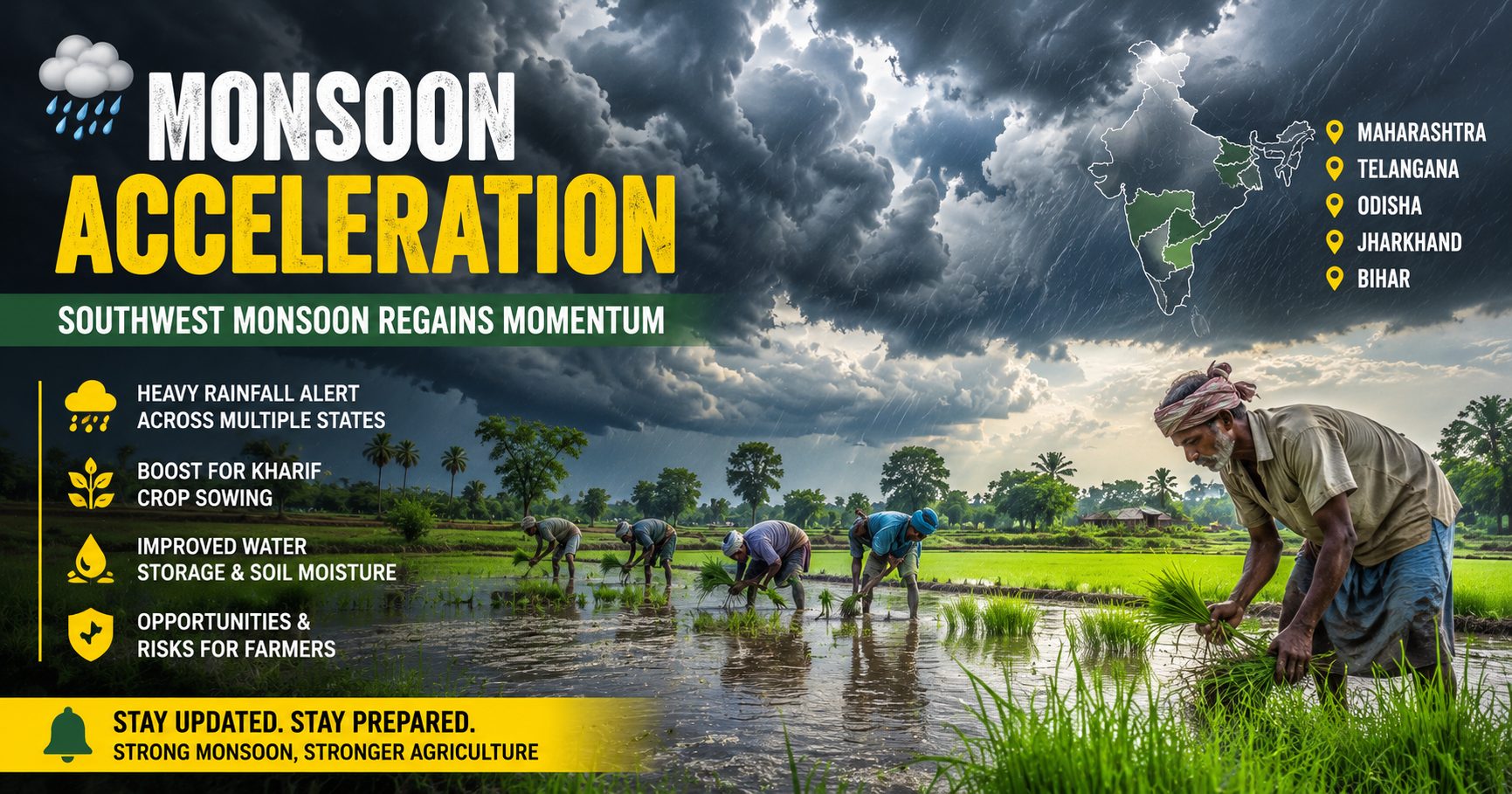
After a delayed start, the Southwest Monsoon has accelerated rapidly across Maharashtra, Telangana, Odisha, Jharkhand, and Bihar. With heavy rainfall alerts issued in several regions, farmers now face both opportunities and challenges. Learn how this monsoon surge can impact crop planning, water management, and agricultural productivity across India.
Monsoon Acceleration Across India: Southwest Monsoon Regains Momentum Bringing Relief and Opportunities for Farmers
Introduction
After an unusually sluggish onset, the Southwest Monsoon has regained strength and is advancing rapidly across several key agricultural states, including Maharashtra, Telangana, Odisha, Jharkhand, and Bihar. Weather agencies have issued heavy rainfall alerts in multiple districts as monsoon currents strengthen and spread inland.
For India's farming community, this development is more than just a weather event. It directly influences sowing decisions, crop health, irrigation planning, and rural livelihoods. While abundant rainfall can boost agricultural productivity, excessive precipitation also introduces risks such as waterlogging, flooding, and crop damage.
Why the Monsoon Acceleration Matters
India's agricultural economy remains deeply dependent on monsoon rainfall. A delayed monsoon often creates uncertainty among farmers regarding crop selection, sowing windows, and input investments.
Impact on Kharif Crop Sowing
The renewed monsoon activity is expected to accelerate sowing operations for:
- Paddy
- Soybean
- Cotton
- Maize
- Pulses
- Groundnut
Timely rainfall improves soil moisture levels, enabling farmers to complete sowing activities efficiently and reduce dependence on groundwater irrigation.
Improved Reservoir and Water Storage Levels
Strong monsoon rainfall contributes significantly to:
- Reservoir recharge
- Groundwater replenishment
- Canal irrigation systems
- Farm pond storage
This creates a stronger foundation for both Kharif and subsequent Rabi seasons.
State-Wise Agricultural Impact
Maharashtra
Maharashtra's agricultural regions have been awaiting consistent rainfall for sowing soybean, cotton, and pulses. The accelerated monsoon is expected to improve crop establishment and reduce moisture stress.
Telangana
Farmers in Telangana can now proceed with paddy and cotton cultivation more confidently. Increased rainfall may also enhance tank and reservoir storage, supporting irrigation needs later in the season.
Odisha
Odisha's rice-growing regions stand to benefit from improved rainfall distribution. Adequate water availability during the early growth stages can positively impact crop productivity.
Jharkhand
Monsoon advancement brings much-needed moisture for rainfed farming systems. Farmers cultivating paddy and maize may experience improved planting conditions.
Bihar
Bihar's agriculture relies heavily on monsoon rains. The recent acceleration could support paddy transplantation and improve overall agricultural prospects for the season.
Opportunities for Farmers During the Active Monsoon Phase
Faster Crop Establishment
Proper rainfall during sowing helps seeds germinate uniformly and promotes healthy crop growth.
Reduced Irrigation Costs
Natural rainfall reduces the need for diesel-powered pumping and groundwater extraction, lowering production expenses.
Enhanced Soil Health
Moderate and well-distributed rainfall improves soil microbial activity and nutrient availability.
Better Yield Potential
When crops receive adequate moisture during critical growth stages, productivity often improves significantly.
Risks Associated with Heavy Rainfall Alerts
While the monsoon acceleration is encouraging, farmers should remain vigilant.
Waterlogging
Excessive rainfall can reduce oxygen availability in the root zone, affecting crop growth.
Soil Erosion
Heavy downpours may wash away fertile topsoil and valuable nutrients.
Pest and Disease Outbreaks
High humidity and standing water create favorable conditions for:
- Blast disease in paddy
- Fungal infections
- Stem borers
- Leaf spot diseases
Flooding Risks
Low-lying agricultural areas may face temporary flooding, resulting in crop damage and delayed field operations.
Best Practices for Farmers During Heavy Rainfall Periods
Ensure Proper Field Drainage
Maintain drainage channels to prevent water stagnation and protect root systems.
Monitor Weather Updates Regularly
Track district-level rainfall forecasts and advisories to make informed decisions.
Use Balanced Nutrient Management
Heavy rainfall may leach nutrients from the soil. Timely nutrient supplementation can help maintain crop vigor.
Protect Young Seedlings
Newly transplanted or germinating crops require additional monitoring during periods of intense rainfall.
Maintain Farm Records
Document rainfall patterns, sowing dates, and crop responses to improve future farm planning.
How Technology Can Help Farmers During Monsoon Variability
Modern agriculture increasingly depends on real-time information and data-driven decision-making.
Farmers who leverage weather intelligence, market insights, expert guidance, and digital agricultural platforms can better manage risks associated with changing monsoon patterns.
AGRIBOZ supports farmers by providing access to agricultural intelligence, expert networks, learning opportunities, and ecosystem support designed to improve farm profitability and resilience.
Conclusion
The rapid advancement of the Southwest Monsoon across Maharashtra, Telangana, Odisha, Jharkhand, and Bihar marks a positive development for India's agricultural sector. Improved rainfall conditions can support sowing operations, enhance water availability, and strengthen crop prospects across major farming regions.
However, farmers must remain cautious about excessive rainfall, waterlogging, pest outbreaks, and flooding risks. Combining traditional farming knowledge with modern agricultural intelligence will be essential for maximizing the benefits of this active monsoon phase.
Register on https://www.agriboz.com and stay connected with the latest agricultural intelligence, expert guidance, training opportunities, and farming innovations.
CTA
Explore the Agriculture Intelligence Platform of Bharat - AGRIBOZ
Access agricultural insights, weather intelligence, expert learning, workshops, farm retreats, networking opportunities, and growth resources designed for farmers, agri-entrepreneurs, trainers, and agricultural professionals.
Register on https://www.agriboz.com
FAQ
Is the delayed monsoon still beneficial for Kharif crops?
Yes. If sufficient rainfall arrives within the critical sowing window, many Kharif crops can still perform well.
Which states are currently experiencing rapid monsoon advancement?
Maharashtra, Telangana, Odisha, Jharkhand, and Bihar are among the states witnessing significant monsoon progress.
What are the main risks of heavy rainfall?
Waterlogging, flooding, soil erosion, nutrient loss, and increased pest and disease pressure.
How can farmers prepare for heavy rainfall?
Maintain drainage systems, monitor weather updates, protect seedlings, and follow crop-specific advisories.
Why is monsoon forecasting important for agriculture?
Accurate forecasts help farmers optimize sowing, irrigation, fertilization, and crop protection decisions.
Explore the Agriculture Intelligence Platform of Bharat - AGRIBOZ
Stay ahead with agricultural intelligence, expert-led learning, weather insights, workshops, farm retreats, networking opportunities, and business growth resources.
Register on https://www.agriboz.com
Q1. Why is the recent monsoon acceleration important for farmers?
It improves soil moisture, supports sowing activities, and enhances water availability for crops.
Q2. Which crops benefit most from the renewed monsoon activity?
Paddy, soybean, cotton, maize, pulses, and groundnut are among the major beneficiaries.
Q3. Can heavy rainfall damage crops?
Yes. Excess rainfall can cause flooding, waterlogging, nutrient loss, and disease outbreaks.
Q4. What should farmers do during heavy rainfall alerts?
Maintain drainage systems, monitor forecasts, inspect fields regularly, and follow agricultural advisories.
Q5. How can digital agriculture platforms help during monsoon season?
They provide timely weather information, expert guidance, market intelligence, and risk management support.