Paddy Sowing Shows Remarkable Resilience: Rice Area Expands by 4.26 Lakh Hectares Despite Early Moisture Stress
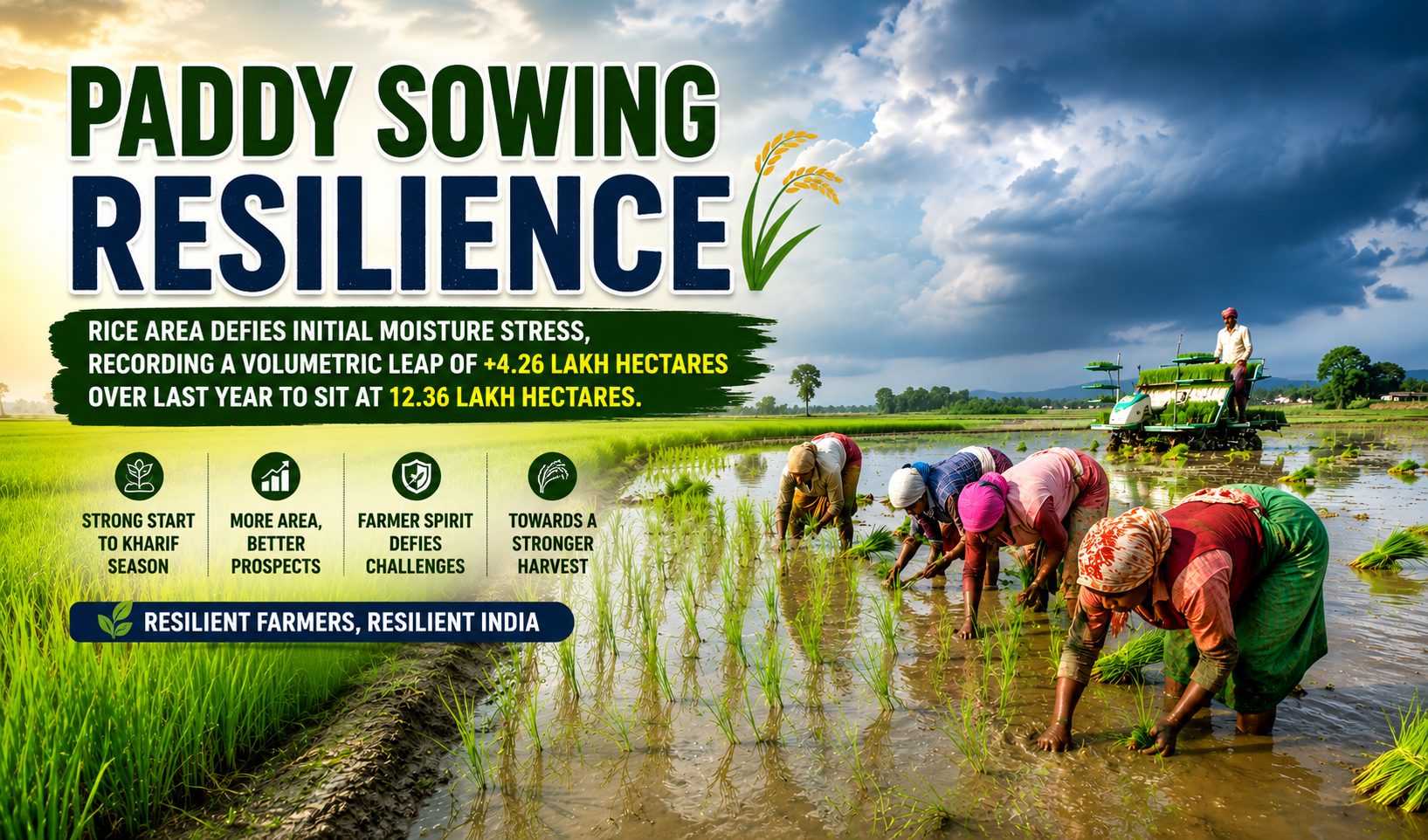
India's paddy cultivation has demonstrated exceptional resilience this season. Despite facing initial moisture stress due to delayed monsoon conditions in several regions, rice sowing has surged by 4.26 lakh hectares compared to last year, reaching 12.36 lakh hectares. Explore what this means for farmers, food security, and the upcoming Kharif season.
Paddy Sowing Shows Remarkable Resilience: Rice Area Expands by 4.26 Lakh Hectares Despite Early Moisture Stress
Introduction
India's Kharif season has started with an encouraging sign for the agriculture sector. Despite concerns over early-season moisture stress and uneven rainfall in several states, paddy cultivation has shown remarkable resilience. The total rice-sown area has increased by 4.26 lakh hectares over the corresponding period last year, reaching 12.36 lakh hectares.
This growth reflects the confidence of Indian farmers, improved planning, and better adaptation to changing weather patterns.
Early Moisture Stress Did Not Stop Farmers
Understanding Moisture Stress
Moisture stress occurs when crops do not receive sufficient soil moisture during the critical stages of sowing and early growth. Delayed or uneven monsoon rainfall can reduce seed germination and slow field preparation.
Despite these challenges, many farmers successfully managed land preparation through irrigation facilities, timely rainfall in key regions, and improved agronomic practices.
Rice Sowing Registers Significant Growth
Area Under Paddy Cultivation
Compared to the same period last year, rice cultivation has expanded significantly.
- Current rice sowing area: 12.36 lakh hectares
- Increase over last year: 4.26 lakh hectares
This impressive increase demonstrates the resilience of India's agricultural sector and the determination of farmers to maintain production despite weather uncertainties.
Factors Driving the Increase
Improved Monsoon Progress
Although the season began with moisture deficits in some regions, subsequent rainfall improved sowing conditions across several major rice-growing states.
Better Irrigation Infrastructure
Access to canal irrigation, borewells, and water harvesting structures enabled farmers to proceed with transplanting and direct-seeded rice even before widespread rainfall arrived.
Government Support
Availability of quality seeds, agricultural advisories, and timely input distribution encouraged farmers to continue sowing operations.
Farmer Adaptability
Indian farmers increasingly use weather forecasts, improved seed varieties, and scientific crop management practices to reduce climate-related risks.
What This Means for Food Security
Rice remains India's most important staple crop. Higher sowing acreage at the beginning of the Kharif season strengthens the possibility of stable production, helping ensure food availability and market stability.
A healthy rice crop also supports rural employment, strengthens the agricultural economy, and contributes to export opportunities if production remains favorable throughout the season.
Challenges Still Remain
While the early sowing figures are encouraging, the crop still depends on consistent rainfall during its vegetative and reproductive stages.
Farmers should continue monitoring:
- Rainfall distribution
- Pest and disease outbreaks
- Nutrient management
- Water availability
- Weather advisories issued by agricultural agencies
Proper crop management during these stages will determine final productivity.
How Farmers Can Maximize Yield
Maintain Balanced Nutrition
Apply fertilizers based on soil test recommendations to promote healthy crop growth.
Monitor Water Levels
Avoid both waterlogging and prolonged moisture stress by managing irrigation efficiently.
Regular Pest Surveillance
Early detection of stem borers, leaf folders, and blast disease can significantly reduce crop losses.
Follow Expert Advisories
Use reliable weather forecasts and agricultural guidance to make timely field decisions.
Conclusion
The expansion of India's paddy sowing area to 12.36 lakh hectares, despite initial moisture stress, highlights the resilience, preparedness, and determination of Indian farmers. If favorable weather conditions continue throughout the season, this positive start could translate into a strong rice harvest and improved food security for the country.
Explore the Agriculture Intelligence Platform of Bharat - AGRIBOZ.
Register on https://www.agriboz.com to access expert crop advisories, market intelligence, weather updates, workshops, and a growing community dedicated to empowering Indian farmers.
AGRIBOZ CTA
Explore the Agriculture Intelligence Platform of Bharat - AGRIBOZ.
Register on https://www.agriboz.com to receive timely agriculture news, crop management insights, expert guidance, training programs, and opportunities to connect with India's leading farming ecosystem.
Explore the Agriculture Intelligence Platform of Bharat - AGRIBOZ.
Register on https://www.agriboz.com to receive crop advisories, weather intelligence, market insights, workshops, and expert guidance that help farmers make better decisions throughout the farming season.
Q1. What is the current rice sowing area in India? The current paddy sowing area has reached approximately 12.36 lakh hectares.
Q2. How much has rice cultivation increased compared to last year? Rice sowing has increased by about 4.26 lakh hectares over the same period last year.
Q3. What is moisture stress in agriculture? Moisture stress occurs when crops receive insufficient soil moisture due to delayed or inadequate rainfall.
Q4. Why is higher paddy sowing important? Higher sowing area improves the chances of increased rice production, strengthens food security, and supports rural livelihoods.
Q5. What should farmers focus on after sowing? Farmers should monitor irrigation, nutrient management, pest control, and weather updates to ensure healthy crop development.