Organic Farming: Benefits, Methods, Challenges, and Future of Sustainable Agriculture
Discover everything you need to know about organic farming, including its benefits, farming methods, certification process, challenges, and why it is becoming the future of sustainable agriculture.
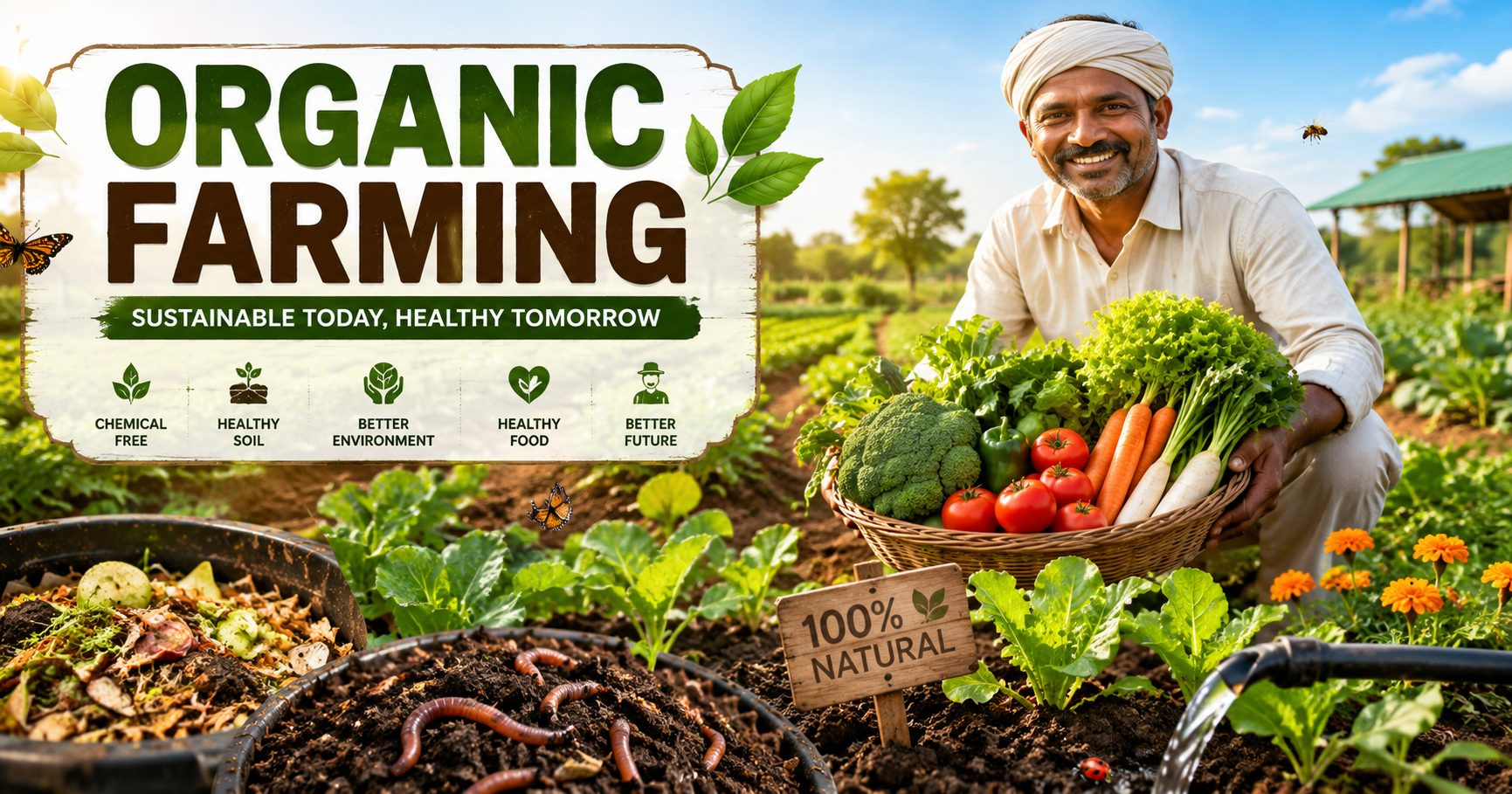
Organic Farming: Benefits, Methods, Challenges, and Future of Sustainable Agriculture
Introduction
Modern agriculture has significantly increased food production, but excessive dependence on chemical fertilizers and pesticides has created environmental and health concerns. Organic farming offers a sustainable alternative by promoting natural methods that improve soil fertility, protect biodiversity, and produce healthier food.
Consumers across the world are increasingly choosing organic products, creating profitable opportunities for farmers who adopt organic cultivation.
What is Organic Farming?
Organic farming is a method of agriculture that relies on natural inputs rather than synthetic chemicals. It focuses on maintaining ecological balance while producing healthy and nutritious crops.
Key principles include:
- Maintaining soil fertility naturally
- Conserving biodiversity
- Reducing environmental pollution
- Promoting sustainable farming practices
- Producing chemical-free food
Benefits of Organic Farming
Improved Soil Health
Organic matter such as compost and farmyard manure improves soil structure, enhances water retention, and increases microbial activity.
Better Environmental Protection
Organic farming minimizes water pollution, protects beneficial insects, and reduces greenhouse gas emissions.
Healthier Food
Organic produce generally contains lower pesticide residues, making it attractive to health-conscious consumers.
Higher Market Value
Certified organic products often command premium prices, increasing farmers' income.
Long-Term Sustainability
Healthy soils remain productive for future generations, ensuring agricultural sustainability.
Common Organic Farming Practices
Crop Rotation
Rotating crops prevents pest buildup and improves soil fertility.
Composting
Organic waste is converted into nutrient-rich compost that naturally enriches the soil.
Green Manuring
Growing specific crops and incorporating them into the soil improves nitrogen availability.
Biological Pest Control
Natural predators and beneficial insects help control harmful pests without chemical pesticides.
Mulching
Mulching conserves soil moisture, suppresses weeds, and regulates soil temperature.
Challenges of Organic Farming
Although organic farming has many benefits, farmers may face several challenges:
- Lower yields during the transition period
- Organic certification requirements
- Higher labor demand
- Weed management difficulties
- Limited availability of organic inputs
Despite these challenges, increasing consumer demand continues to improve profitability.
Organic Certification
Certification ensures that products meet established organic standards. Farmers should follow approved production practices and maintain detailed farm records to qualify for certification.
Certified products build consumer trust and access premium domestic and international markets.
Future of Organic Farming
Growing awareness about food safety, climate change, and environmental conservation is driving rapid expansion of organic agriculture.
Digital agriculture platforms, training programs, and farmer communities are making it easier for growers to adopt sustainable practices and reach larger markets.
Conclusion
Organic farming is more than an agricultural technique—it is a commitment to healthier food, healthier soils, and a healthier planet. While the transition requires planning and dedication, the long-term environmental and economic benefits can be substantial.
Explore the Agriculture Intelligence Platform of Bharat - AGRIBOZ.
Register on https://www.agriboz.com to access agricultural knowledge, connect with experts, and discover opportunities to grow your farming business.
AGRIBOZ CTA
Explore the Agriculture Intelligence Platform of Bharat - AGRIBOZ.
Register on https://www.agriboz.com to access expert guidance, training programs, workshops, agricultural resources, and a growing farming community dedicated to sustainable agriculture.
Explore the Agriculture Intelligence Platform of Bharat - AGRIBOZ.
Register on https://www.agriboz.com to connect with agriculture experts, join workshops, access farming resources, and become part of Bharat's agriculture intelligence ecosystem.
Q1. What is organic farming? Organic farming is a farming method that avoids synthetic fertilizers and pesticides while using natural inputs to improve soil health and crop production.
Q2. Is organic farming profitable? Yes. Although production costs and certification may initially be higher, organic products often receive premium market prices.
Q3. What are the major organic fertilizers? Compost, farmyard manure, vermicompost, green manure, neem cake, and biofertilizers are commonly used.
Q4. How long does organic certification take? The transition period generally takes around two to three years, depending on certification standards and previous farming practices.
Q5. Why is organic farming important? Organic farming protects the environment, improves soil fertility, promotes biodiversity, and produces healthier food.