
Kharif Sowing Sees Positive Growth: Coverage Reaches 119.90 Lakh Hectares Across India
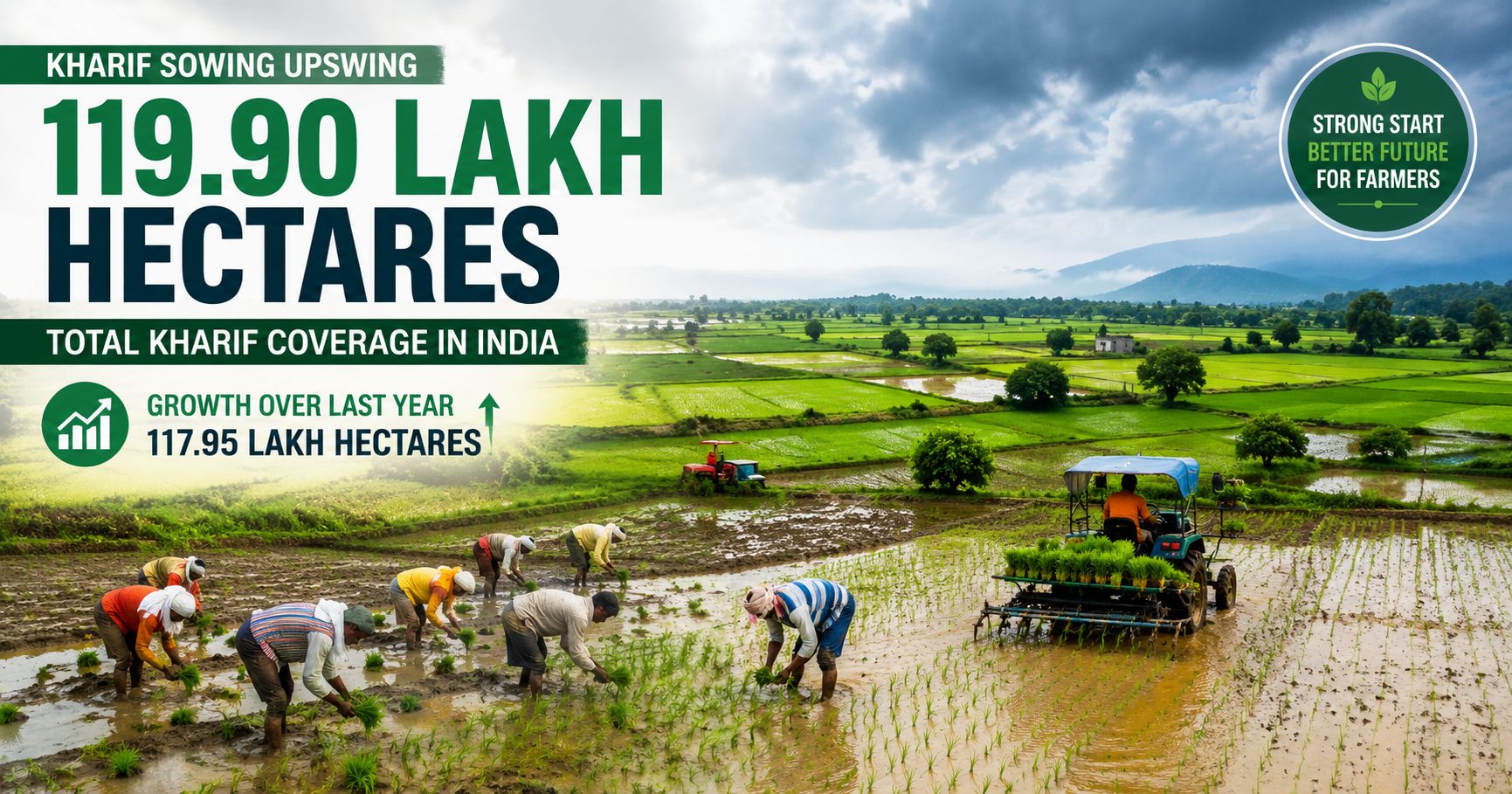
India’s Kharif sowing season has started on a positive note with total crop coverage reaching 119.90 lakh hectares, surpassing last year's 117.95 lakh hectares. This growth signals stronger farmer participation, favorable weather conditions, and improved agricultural preparedness, creating optimism for the upcoming harvest season and rural economy.
Kharif Sowing Sees Positive Growth: Coverage Reaches 119.90 Lakh Hectares Across India
Introduction
India's agriculture sector has received encouraging news as the Ministry of Agriculture reported that total Kharif crop coverage has reached 119.90 lakh hectares, compared to 117.95 lakh hectares during the same period last year. This increase reflects a positive momentum in sowing activities and indicates growing confidence among farmers as the monsoon season progresses.
The early expansion in acreage is a critical indicator for food production, farmer income, and overall agricultural growth. As Kharif crops form the backbone of India's food security system, higher sowing coverage often translates into stronger agricultural output and improved rural economic activity.
Understanding the Importance of Kharif Sowing
What Are Kharif Crops?
Kharif crops are cultivated during the monsoon season and harvested after the rains. Major Kharif crops include:
- Paddy
- Maize
- Soybean
- Cotton
- Groundnut
- Pulses
- Millets
These crops rely heavily on monsoon rainfall and contribute significantly to India's food and oilseed production.
Why Sowing Coverage Matters
The area covered under sowing acts as an early indicator of agricultural performance. Increased acreage generally suggests:
- Better farmer confidence
- Favorable weather conditions
- Improved seed availability
- Enhanced irrigation support
- Stronger market expectations
A rise in sowing area often creates positive expectations for production, supply chains, and agricultural markets.
Kharif Coverage Reaches 119.90 Lakh Hectares
Positive Growth Over Last Year
According to the Ministry of Agriculture, total Kharif sowing coverage has increased from 117.95 lakh hectares last year to 119.90 lakh hectares this year.
This growth demonstrates:
- Early farmer participation
- Improved field preparedness
- Better utilization of monsoon rainfall
- Increased adoption of modern farming practices
The increase, though moderate, is significant during the initial stages of the sowing season and sets a positive tone for the months ahead.
Key Factors Driving Growth
#### Favorable Monsoon Progress
Timely rainfall in many agricultural regions has encouraged farmers to begin sowing operations without delay.
#### Improved Access to Inputs
Availability of quality seeds, fertilizers, and mechanization services has enabled faster field operations.
#### Government Support Programs
Various agricultural support schemes have helped farmers access resources required for timely sowing and crop management.
#### Growing Awareness Among Farmers
More farmers are adopting scientific farming practices and leveraging agricultural advisory services for better decision-making.
Impact on Farmers and Rural Economy
Potential for Higher Production
If weather conditions remain favorable throughout the season, increased acreage could contribute to stronger crop output.
Better Income Opportunities
Higher production often improves market participation and creates opportunities for increased farm revenues.
Strengthening Food Security
A successful Kharif season plays a major role in maintaining adequate food grain supplies across the country.
Boost to Agri-Value Chains
Growth in agricultural production benefits:
- Input suppliers
- Transporters
- Food processors
- Retailers
- Exporters
The positive ripple effect supports broader rural economic development.
Challenges That Still Require Attention
Weather Uncertainty
Despite a strong start, excessive rainfall or prolonged dry spells can affect crop establishment and productivity.
Pest and Disease Risks
Changing climatic conditions may increase vulnerability to pest infestations and crop diseases.
Market Price Volatility
Farmers need access to reliable market intelligence to make profitable production and marketing decisions.
Resource Management
Efficient water use, balanced fertilization, and timely crop protection remain essential for maximizing yields.
The Role of Digital Agriculture
Data-Driven Farming Decisions
Modern agriculture increasingly depends on:
- Weather intelligence
- Market insights
- Crop advisory systems
- Farm management tools
Digital platforms help farmers make informed decisions throughout the crop cycle.
Why Farmers Need Agricultural Intelligence
Real-time information enables farmers to:
- Reduce risks
- Improve productivity
- Optimize resource use
- Increase profitability
Agricultural intelligence platforms are becoming essential tools for future-ready farming.
Conclusion
The increase in Kharif sowing coverage to 119.90 lakh hectares reflects a promising start to India's agricultural season. With acreage surpassing last year's 117.95 lakh hectares, farmers, policymakers, and agri-business stakeholders have reasons to remain optimistic.
Continued support through technology, weather intelligence, market information, and scientific farming practices will be crucial for converting this positive sowing trend into higher productivity and better farmer incomes.
Explore the Agriculture Intelligence Platform of Bharat - AGRIBOZ.
Register on https://www.agriboz.com
Explore the Agriculture Intelligence Platform of Bharat - AGRIBOZ
Stay ahead with agriculture news, crop intelligence, market trends, weather insights, expert guidance, training opportunities, and rural innovation updates.
Whether you are a farmer, agripreneur, trainer, researcher, agri-startup, or agriculture enthusiast, AGRIBOZ helps you make smarter agricultural decisions.
Register on https://www.agriboz.com
Q1. What is the current Kharif sowing coverage in India? The Ministry of Agriculture reported total Kharif crop coverage at 119.90 lakh hectares.
Q2. How does this compare with last year? Last year's coverage during the same period was 117.95 lakh hectares, indicating positive growth this season.
Q3. Which crops are included in the Kharif season? Major Kharif crops include paddy, maize, soybean, cotton, pulses, groundnut, and millets.
Q4. Why is sowing coverage important? Sowing coverage provides an early indication of crop production potential and overall agricultural performance.
Q5. How can farmers improve Kharif crop productivity? Farmers can improve productivity through timely sowing, quality inputs, scientific crop management, weather monitoring, and access to agricultural intelligence platforms.