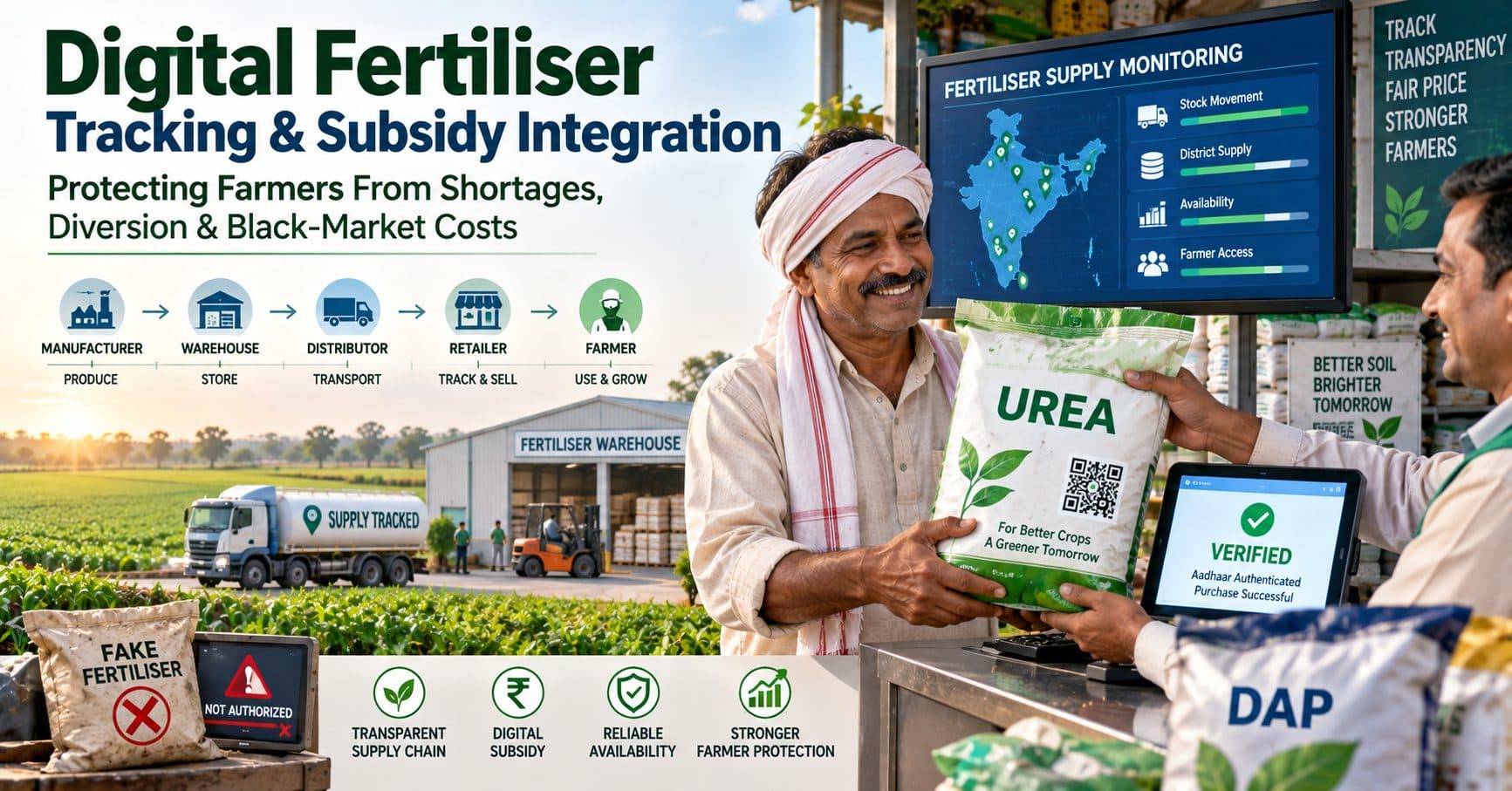

India’s Fertilizer Subsidy Bill May Rise to ₹1.86 Lakh Crore: What It Means for Farmers, Agribusinesses, and Agricultural Sustainability
Rising global chemical logistics costs, import dependencies, and macroeconomic pressures are pushing India's fertilizer subsidy requirements higher than expected. With revised projections ranging between ₹1.71 lakh crore and ₹1.86 lakh crore, farmers, policymakers, and agribusiness stakeholders must prepare for significant implications across input pricing, government spending, and agricultural sustainability.
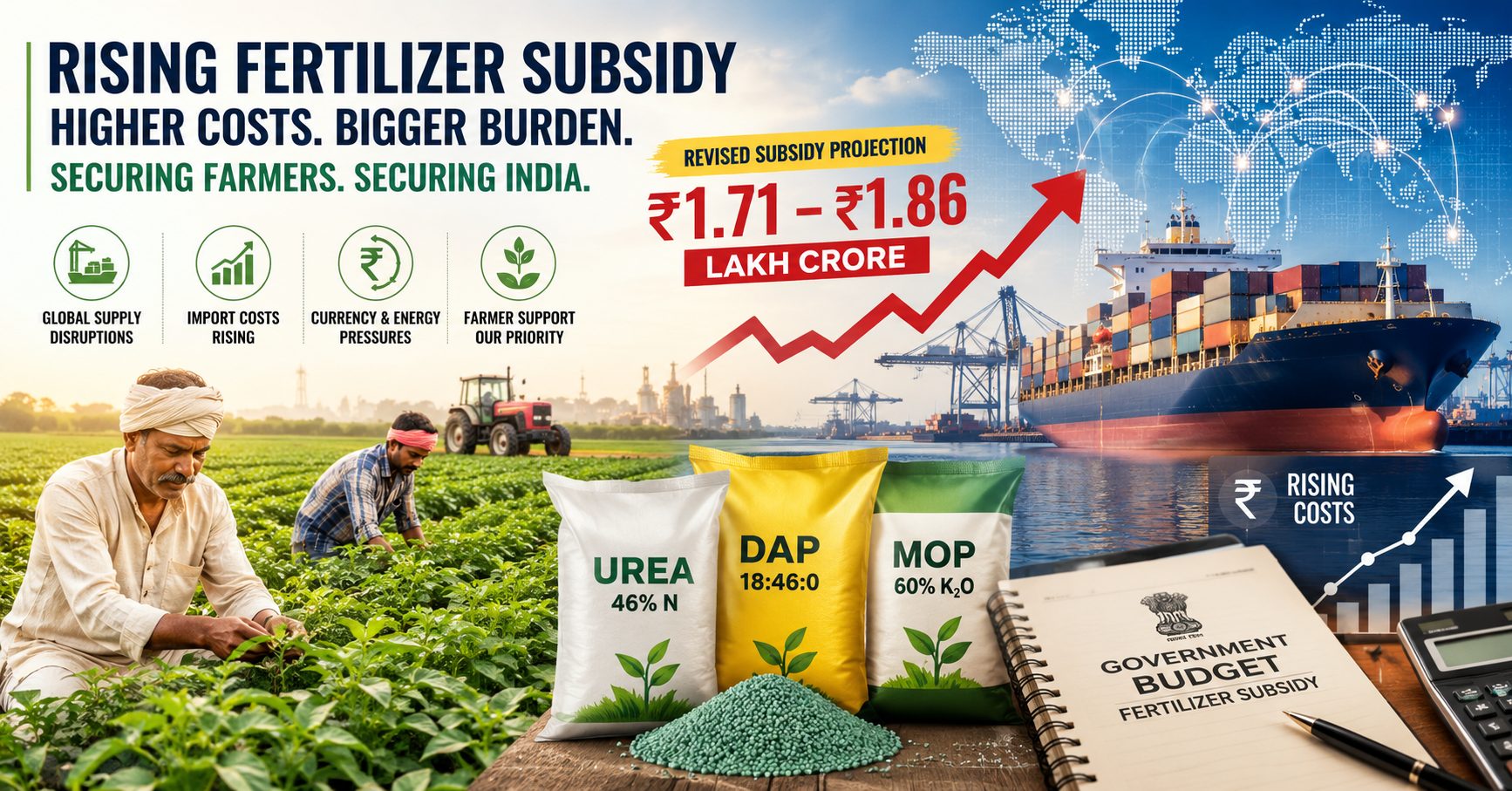
India’s Fertilizer Subsidy Bill May Rise to ₹1.86 Lakh Crore: Impact on Indian Agriculture
Introduction
India's fertilizer subsidy system remains one of the most critical pillars supporting agricultural productivity. However, worsening global chemical logistics, volatile import costs, currency fluctuations, and geopolitical uncertainties are placing immense pressure on government finances.
Recent projections suggest that the Centre's revised fertilizer subsidy burden could increase to a range of ₹1.71 lakh crore to ₹1.86 lakh crore. While subsidies continue to protect farmers from steep fertilizer price hikes, the rising fiscal burden raises important questions about long-term sustainability.
Understanding these developments is essential for farmers, agribusinesses, policymakers, and agricultural entrepreneurs.
Why Fertilizer Subsidies Matter
Supporting Farm Profitability
Fertilizer subsidies help ensure that essential nutrients such as urea, DAP, MOP, and NPK fertilizers remain affordable for millions of Indian farmers.
Without subsidies:
- Input costs would increase significantly.
- Crop production expenses would rise.
- Farm profitability would decline.
- Food inflation could accelerate.
Ensuring National Food Security
Affordable fertilizers contribute directly to:
- Higher crop yields
- Stable food production
- Better nutrient management
- Reduced risk of supply shortages
The subsidy mechanism has played a major role in supporting India's food security objectives for decades.
Why Subsidy Estimates Are Rising
Global Chemical Supply Chain Disruptions
The international fertilizer market remains vulnerable to:
- Shipping disruptions
- Rising freight rates
- Geopolitical tensions
- Energy price volatility
Since many fertilizer raw materials are imported, any disruption in global logistics quickly impacts procurement costs.
Dependence on Imported Inputs
India imports significant quantities of:
- Phosphatic fertilizers
- Potassic fertilizers
- Ammonia
- Sulfur
- Natural gas-linked inputs
When global prices rise, subsidy requirements increase because retail fertilizer prices for farmers remain largely controlled.
Currency and Import Cost Pressures
A weaker rupee against major global currencies increases the landed cost of imported fertilizer materials.
Higher import bills directly translate into:
- Larger subsidy outgo
- Greater fiscal pressure
- Increased budget revisions
Energy Market Volatility
Natural gas remains a key input for fertilizer manufacturing.
Fluctuating energy prices affect:
- Domestic fertilizer production costs
- Imported fertilizer costs
- Overall subsidy calculations
Fiscal Implications for the Government
Increasing Budgetary Pressure
A subsidy burden approaching ₹1.86 lakh crore represents a substantial commitment from public finances.
This may require:
- Additional budget allocations
- Mid-year expenditure adjustments
- Reprioritization of government spending
Balancing Farmer Welfare and Fiscal Discipline
The government faces a complex challenge:
- Protecting farmers from rising costs
- Maintaining fiscal prudence
- Ensuring uninterrupted fertilizer availability
Finding the right balance will be critical in the coming years.
Impact on Farmers
Short-Term Protection
The immediate benefit for farmers is clear.
Subsidies continue to shield them from global fertilizer price shocks, helping maintain:
- Input affordability
- Crop planning confidence
- Production stability
Long-Term Concerns
Overreliance on subsidy-driven fertilizer consumption can lead to:
- Nutrient imbalance
- Soil degradation
- Excessive urea usage
- Reduced fertilizer efficiency
Sustainable nutrient management will become increasingly important.
Opportunities for Agricultural Innovation
Precision Nutrient Management
Digital agriculture tools can help farmers:
- Optimize fertilizer use
- Reduce wastage
- Improve nutrient efficiency
- Lower cultivation costs
Biofertilizers and Alternative Inputs
Growing fiscal pressure may accelerate adoption of:
- Biofertilizers
- Organic nutrient solutions
- Microbial formulations
- Integrated nutrient management systems
Data-Driven Farming
Technology platforms can support better decision-making through:
- Soil health analysis
- Crop nutrient recommendations
- Fertilizer optimization strategies
- Cost-benefit monitoring
What Agribusinesses Should Watch
Supply Chain Risk Management
Input companies must monitor:
- Global freight markets
- Raw material availability
- Currency trends
- Import dependencies
Policy Developments
Future policy changes may focus on:
- Nutrient efficiency
- Direct benefit mechanisms
- Domestic manufacturing expansion
- Sustainable fertilizer adoption
Businesses that adapt early may gain a competitive advantage.
Conclusion
India's projected fertilizer subsidy bill of ₹1.71 lakh crore to ₹1.86 lakh crore reflects the growing impact of global supply chain disruptions, import dependencies, and macroeconomic pressures. While subsidies continue to protect farmers and support food security, the rising fiscal burden highlights the need for smarter nutrient management, innovation, and sustainable agricultural practices.
The future of Indian agriculture will depend not only on government support but also on technology-driven efficiency and informed decision-making.
Register on https://www.agriboz.com and stay ahead with data-driven agricultural intelligence, market insights, and expert-led learning opportunities.
CTA
Explore the Agriculture Intelligence Platform of Bharat - AGRIBOZ
Gain access to agricultural intelligence, policy insights, expert guidance, training programs, workshops, agribusiness opportunities, and farm innovation resources.
Register on https://www.agriboz.com
FAQ
Why is India's fertilizer subsidy increasing?
The increase is mainly driven by rising global fertilizer prices, higher logistics costs, import dependency, energy market volatility, and currency fluctuations.
How do fertilizer subsidies help farmers?
They reduce fertilizer costs, improve affordability, support crop production, and protect farm profitability.
Will fertilizer prices increase for farmers?
Subsidies are designed to shield farmers from major price increases, although future policy adjustments could influence market dynamics.
What are the risks of high fertilizer subsidies?
Large subsidy bills can strain government finances and may encourage inefficient fertilizer usage if not accompanied by sustainable nutrient management practices.
How can farmers reduce fertilizer costs?
Farmers can adopt soil testing, precision nutrient management, integrated nutrient management, biofertilizers, and digital advisory solutions.
Explore the Agriculture Intelligence Platform of Bharat - AGRIBOZ
Discover actionable agricultural intelligence, policy updates, market trends, expert training programs, farm business opportunities, workshops, and innovation networks.
Register on https://www.agriboz.com Q1. Why are fertilizer subsidy projections increasing?
Global chemical logistics disruptions, rising import costs, energy price fluctuations, and currency pressures are increasing procurement costs, resulting in higher subsidy requirements.
Q2. What is the projected fertilizer subsidy range?
Current estimates indicate a revised range between ₹1.71 lakh crore and ₹1.86 lakh crore.
Q3. How do subsidies benefit farmers?
They keep fertilizer prices affordable and protect farmers from international price volatility.
Q4. What challenges does a higher subsidy bill create?
It increases fiscal pressure on government finances and may require budget adjustments or policy reforms.
Q5. What is the long-term solution?
Improved nutrient efficiency, precision agriculture, domestic manufacturing expansion, and sustainable fertilizer alternatives can reduce subsidy dependence.