
IIM-B June 2026 Shock Report: 75.97% of India's Top Listed Companies Fail Biodiversity Protection Reporting
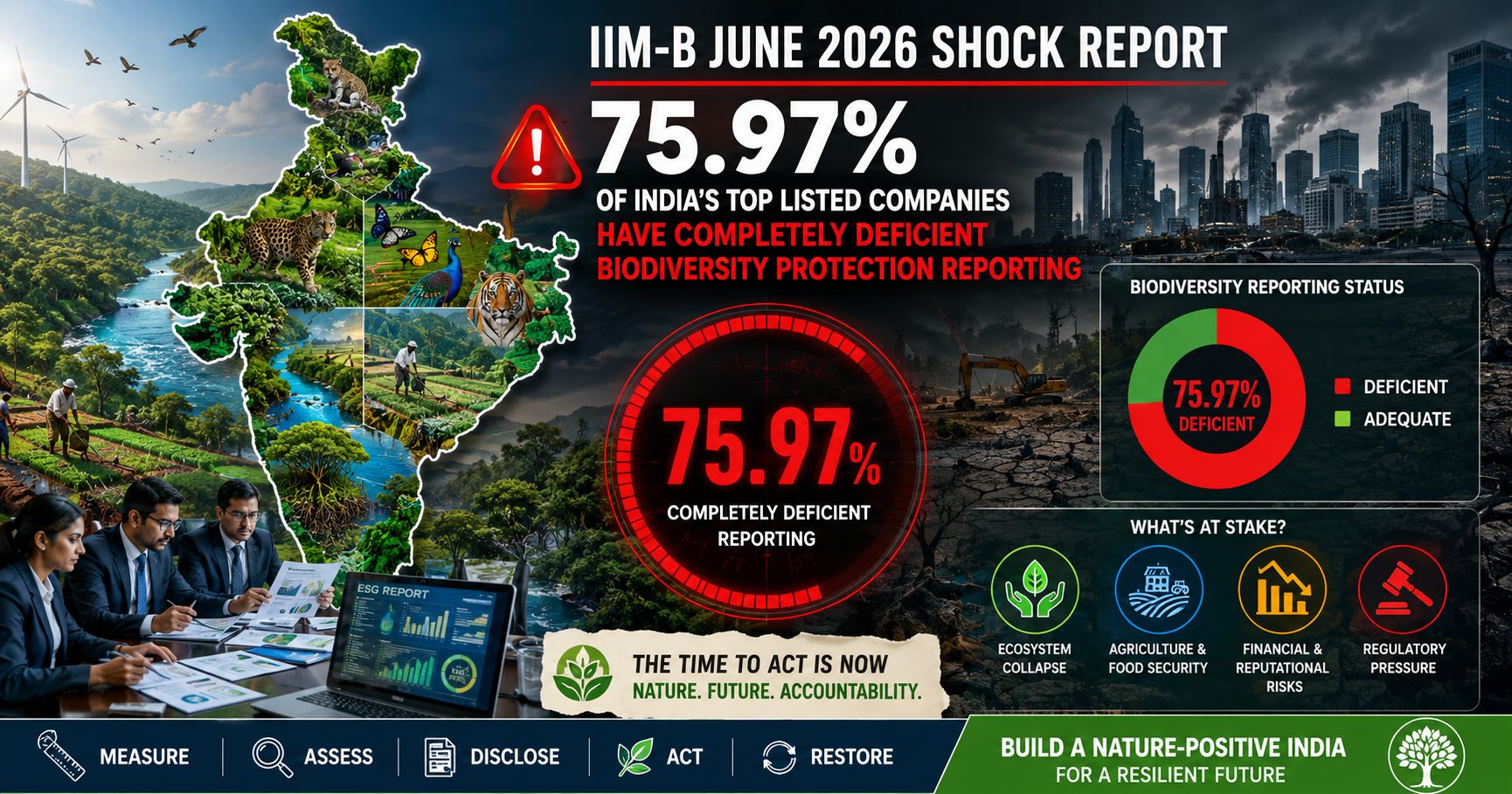
A June 2026 report associated with IIM Bangalore has raised serious concerns about corporate sustainability in India, revealing that 75.97% of top listed companies reportedly have completely deficient biodiversity protection reporting. Discover what this means for agriculture, food systems, ESG compliance, investors, and the future of nature-positive business practices.
IIM-B June 2026 Shock Report: 75.97% of India's Top Listed Companies Fail Biodiversity Protection Reporting
Introduction
India is one of the world's most biodiverse countries and also one of the fastest-growing major economies. However, a June 2026 report linked to IIM Bangalore has triggered a major debate across sustainability, agriculture, corporate governance, and environmental circles.
According to the report, 75.97% of India's top listed companies were found to have completely deficient biodiversity protection reporting.
This finding is alarming because biodiversity is no longer a niche environmental issue. It directly affects food production, agriculture, water security, climate resilience, supply chains, business continuity, and long-term economic growth.
For farmers, agribusinesses, investors, policymakers, and sustainability professionals, the report sends a clear message: biodiversity risks can no longer remain invisible.
Why Biodiversity Reporting Matters
Biodiversity Is Economic Infrastructure
Most businesses depend on natural ecosystems either directly or indirectly.
Agriculture depends on:
- Pollinators
- Healthy soil organisms
- Water availability
- Genetic diversity
- Natural pest control systems
Without biodiversity, food systems become vulnerable to climate shocks, disease outbreaks, declining productivity, and rising production costs.
Investors Are Watching Nature Risks
Global investment frameworks increasingly require companies to disclose:
- Environmental risks
- Nature dependencies
- Ecosystem impacts
- Biodiversity conservation efforts
Companies that fail to report these risks may face future regulatory, financial, and reputational challenges.
Understanding the 75.97% Deficiency Figure
What Does "Completely Deficient Reporting" Mean?
A company may be considered deficient when biodiversity disclosures are:
- Missing entirely
- Extremely superficial
- Unsupported by measurable indicators
- Lacking biodiversity targets
- Absent from sustainability strategies
- Unconnected to operational impacts
In many cases, organizations discuss climate change extensively while giving little attention to biodiversity loss.
The ESG Blind Spot
Many corporations have focused heavily on carbon emissions and net-zero commitments.
However, biodiversity loss presents a separate risk.
A company can reduce emissions while still contributing to:
- Habitat destruction
- Soil degradation
- Water pollution
- Species decline
- Ecosystem fragmentation
This imbalance creates a significant sustainability gap.
Why Agriculture Should Pay Attention
Biodiversity and Farm Productivity
Agricultural productivity depends heavily on ecosystem services.
These include:
- Pollination
- Nutrient cycling
- Soil fertility
- Water retention
- Pest regulation
When biodiversity declines, farming systems often become more dependent on costly external inputs.
Food Security Risks
Loss of biodiversity can reduce resilience against:
- Droughts
- Floods
- Pest infestations
- Emerging diseases
- Climate variability
As biodiversity weakens, food systems become increasingly fragile.
Global Momentum Toward Biodiversity Accountability
The Rise of Nature-Positive Business
Around the world, governments and investors are moving toward stronger biodiversity disclosures.
Key developments include:
- Nature-related risk assessments
- Biodiversity reporting frameworks
- Sustainable finance requirements
- Supply-chain traceability expectations
Businesses that prepare early will likely gain a competitive advantage.
Biodiversity Is Becoming a Boardroom Issue
Corporate leaders are increasingly recognizing that biodiversity is not just an environmental concern.
It is also a:
- Financial issue
- Supply-chain issue
- Risk-management issue
- Reputation issue
- Growth issue
What Companies Must Do Next
Measure Biodiversity Dependencies
Organizations need to identify how operations depend on ecosystems.
Assess Nature Impacts
Companies should evaluate impacts across:
- Land use
- Water use
- Agricultural sourcing
- Infrastructure development
Set Measurable Targets
Meaningful biodiversity reporting requires:
- Baseline assessments
- Quantifiable indicators
- Time-bound goals
- Transparent disclosures
Integrate Biodiversity Into Business Strategy
Biodiversity cannot remain a CSR activity.
It must become part of:
- Risk management
- Procurement
- Investment decisions
- Sustainability governance
What This Means for Indian Agriculture
Opportunity for Agritech and Sustainable Farming
The growing focus on biodiversity creates opportunities for:
- Regenerative agriculture
- Organic farming
- Precision agriculture
- Agroforestry
- Biodiversity monitoring technologies
Data Will Become Critical
Farmers, FPOs, agribusinesses, and sustainability professionals who can generate biodiversity-related data may become increasingly valuable within future agricultural supply chains.
Conclusion
The reported finding that 75.97% of India's leading listed companies have completely deficient biodiversity protection reporting should serve as a wake-up call.
Biodiversity is not merely about protecting wildlife. It is about safeguarding food systems, agricultural productivity, water security, climate resilience, and long-term economic stability.
As biodiversity disclosure expectations increase globally, Indian businesses have an opportunity to move from compliance-driven sustainability to genuine ecosystem stewardship.
For the agriculture sector, this shift could unlock new opportunities in regenerative farming, sustainable value chains, and nature-positive growth.
Explore the Agriculture Intelligence Platform of Bharat - AGRIBOZ.
Register on https://www.agriboz.com
Explore the Agriculture Intelligence Platform of Bharat - AGRIBOZ
Whether you are a farmer, agripreneur, sustainability professional, researcher, trainer, student, or agribusiness leader, the future of agriculture will increasingly be shaped by biodiversity intelligence and ecosystem resilience.
Join AGRIBOZ to access:
- Agriculture knowledge resources
- Expert-led workshops
- Sustainable farming insights
- Agri-business opportunities
- Research and innovation ecosystem
- Agriculture networking community
Register on https://www.agriboz.com
Q1. What is biodiversity reporting?
Biodiversity reporting refers to the disclosure of a company's impacts, dependencies, risks, and actions related to ecosystems, species, habitats, and natural resources.
Q2. Why is biodiversity important for agriculture?
Biodiversity supports pollination, soil health, water regulation, pest control, and overall farm productivity.
Q3. What does deficient biodiversity reporting indicate?
It generally indicates that a company has inadequate, incomplete, or missing disclosures regarding biodiversity-related impacts and management practices.
Q4. How does biodiversity affect business performance?
Biodiversity loss can disrupt supply chains, increase operational risks, reduce resource availability, and create regulatory and reputational challenges.
Q5. What is a nature-positive business model?
A nature-positive business model aims to reduce ecological harm while actively restoring and enhancing ecosystems.
Q6. How can agribusinesses improve biodiversity performance?
They can adopt regenerative agriculture, agroforestry, sustainable sourcing, biodiversity monitoring, and transparent reporting practices.
Q7. Why are investors focusing on biodiversity?
Investors increasingly recognize biodiversity loss as a material financial risk that can affect long-term business sustainability.
Q8. How can AGRIBOZ help agriculture stakeholders?
AGRIBOZ provides access to agricultural intelligence, training, sustainability insights, networking opportunities, and ecosystem participation for the agriculture sector.