
Critical Lightning Alert: Severe Convective Cloud-to-Ground Storm Risk Across MP, Chhattisgarh, Jharkhand and Odisha
A high-risk cloud-to-ground lightning threat has emerged across parts of Madhya Pradesh, Chhattisgarh, Jharkhand, and Odisha during afternoon convective hours. With a severity score of 95/100 and high probability conditions, farmers, agricultural workers, dairy operators, shepherds, and FPOs must implement immediate safety protocols to protect human life and livestock assets.
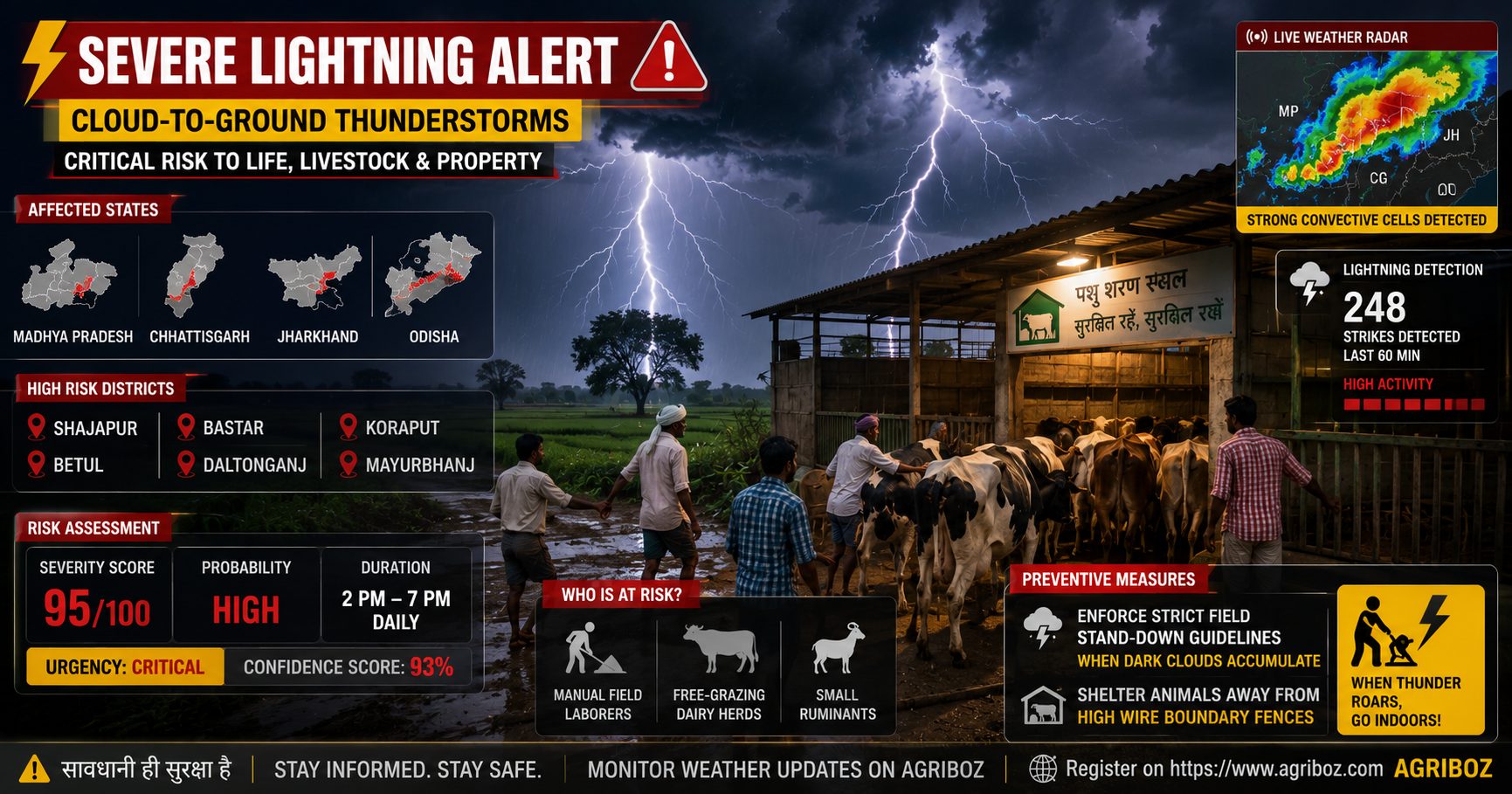
Critical Lightning Risk Alert for Central and Eastern India
Agricultural communities across parts of Madhya Pradesh, Chhattisgarh, Jharkhand, and Odisha face a significant cloud-to-ground lightning threat during afternoon convective periods.
The risk is particularly elevated between 2 PM and 7 PM when thunderstorm development is expected to intensify. Human safety must be treated as the highest priority, followed by livestock protection and operational risk management.
Areas Under Elevated Risk
Madhya Pradesh
- Shajapur
- Betul
Chhattisgarh
- Bastar
Jharkhand
- Daltonganj region
Odisha
- Koraput
- Mayurbhanj
Threat Assessment
Severity Indicators
- Severity Score: 95/100
- Probability: High
- Urgency Level: Critical
- Confidence Score: 93%
These indicators suggest conditions capable of producing dangerous cloud-to-ground lightning strikes with life-threatening consequences.
Why Agricultural Communities Face Higher Exposure
Farm workers and livestock often operate in open landscapes where lightning exposure risk increases substantially.
High-Risk Groups
- Manual field laborers
- Harvest crews
- Irrigation workers
- Dairy farmers
- Shepherds
- Free-grazing cattle operators
- Goat and sheep rearers
High-Risk Locations
- Open crop fields
- Elevated terrain
- Grazing lands
- Water bodies
- Metal fencing systems
- Boundary wire enclosures
Potential Economic Impact
While the greatest concern is loss of human life, livestock losses can also create severe financial damage.
Livestock Risk
Lightning strikes may cause:
- Direct cattle fatalities
- Multiple animal losses during herd grazing
- Reproductive stock loss
- Dairy production disruption
Estimated replacement value of a productive crossbred dairy cow may exceed ₹60,000, excluding future milk income losses.
Secondary Impacts
- Veterinary costs
- Income interruption
- Breeding program setbacks
- Farm labor disruption
Immediate Safety Protocols for Farmers
Before Thunderstorms Develop
Monitor:
- Rapid cloud darkening
- Towering thundercloud formation
- Distant thunder
- Sudden wind shifts
Once these signs appear, outdoor agricultural activities should be suspended immediately.
Field Stand-Down Procedure
- Stop manual field operations.
- Exit open agricultural plots.
- Move workers to enclosed structures.
- Suspend mechanized activities where practical.
- Avoid isolated trees.
Human life protection must override operational targets.
Livestock Protection Measures
Dairy Cattle
Move animals to:
- Properly constructed shelters
- Covered sheds
- Secure livestock housing
Avoid
- Open grazing during storm periods
- High wire boundary fencing
- Metal structures without proper protection
- Isolated shade trees
Small Ruminants
Goats and sheep should be relocated to enclosed protected structures before storm development intensifies.
What Not To Do During Lightning Activity
Avoid
- Standing in open fields
- Working near irrigation pipes
- Using metal farm tools
- Sheltering under isolated trees
- Gathering livestock beneath single tall trees
- Remaining near wire fencing systems
These locations significantly increase strike vulnerability.
Recommended Farm Operations Window
Where possible:
Safer Working Periods
- Early morning operations
- Late evening activities after storm risk declines
High-Risk Period
- 2 PM to 7 PM
Additional caution is recommended throughout this timeframe.
Emergency Response Guidance
If lightning activity begins:
- Stop field work immediately.
- Move people indoors.
- Relocate livestock to protected shelter.
- Avoid electrical equipment.
- Remain sheltered until at least 30 minutes after the last thunder is heard.
Conclusion
The combination of high lightning probability, severe convective activity, and elevated exposure among agricultural workers makes this a critical farm safety event for affected districts.
Every farm manager, FPO leader, dairy operator, village coordinator, and agricultural worker should prioritize immediate implementation of lightning safety protocols. A temporary pause in field activity can prevent irreversible human and livestock losses.
Register on https://www.agriboz.com to receive agricultural weather intelligence, risk alerts, disaster preparedness advisories, and farm safety updates across Bharat.
CTA
Explore the Agriculture Intelligence Platform of Bharat - AGRIBOZ
Stay informed with real-time agricultural risk intelligence, weather alerts, livestock protection advisories, climate resilience insights, and farm management guidance.
Register on https://www.agriboz.com
FAQ
Which districts face the highest lightning risk?
Shajapur, Betul, Bastar, Daltonganj, Koraput, and Mayurbhanj are among the highlighted high-risk districts.
What is the most dangerous period?
The primary threat window is between 2 PM and 7 PM during daily convective storm development.
Who faces the greatest danger?
Manual field laborers, dairy farmers, shepherds, and free-grazing livestock are among the most exposed groups.
Why should livestock be moved away from wire fences?
Metal and wire structures can increase lightning-related hazards and should be avoided during thunderstorms.
What is the first action farmers should take when thunderclouds appear?
Immediately suspend field work and move workers and livestock to safer sheltered locations.
Explore the Agriculture Intelligence Platform of Bharat - AGRIBOZ
Protect your farm with timely intelligence.
Benefits:
- Weather risk alerts
- Livestock protection advisories
- Climate resilience updates
- Farm disaster preparedness guidance
- Agricultural intelligence reports
- Expert training and workshops
- Rural risk management insights
Register on https://www.agriboz.com
Q1. What is the severity level of this lightning threat? The advisory carries a severity score of 95/100 with high-probability conditions.
Q2. Which states are affected? Madhya Pradesh, Chhattisgarh, Jharkhand, and Odisha.
Q3. What time period presents the greatest danger? Afternoon convective hours between 2 PM and 7 PM.
Q4. Which livestock are most vulnerable? Free-grazing dairy cattle, goats, sheep, and other animals exposed in open areas.
Q5. Why should animals be kept away from wire fencing? Metal fencing systems can increase exposure risks during lightning activity.
Q6. What should field workers do when thunderclouds accumulate? Immediately suspend outdoor work and seek safe enclosed shelter.
Q7. How can farmers receive additional risk alerts? Register on AGRIBOZ to access agricultural weather intelligence and farm safety advisories.