The Low-Glycemic Quick-Commerce Boom: How Millets Are Becoming India’s Next Urban Consumption Megatrend
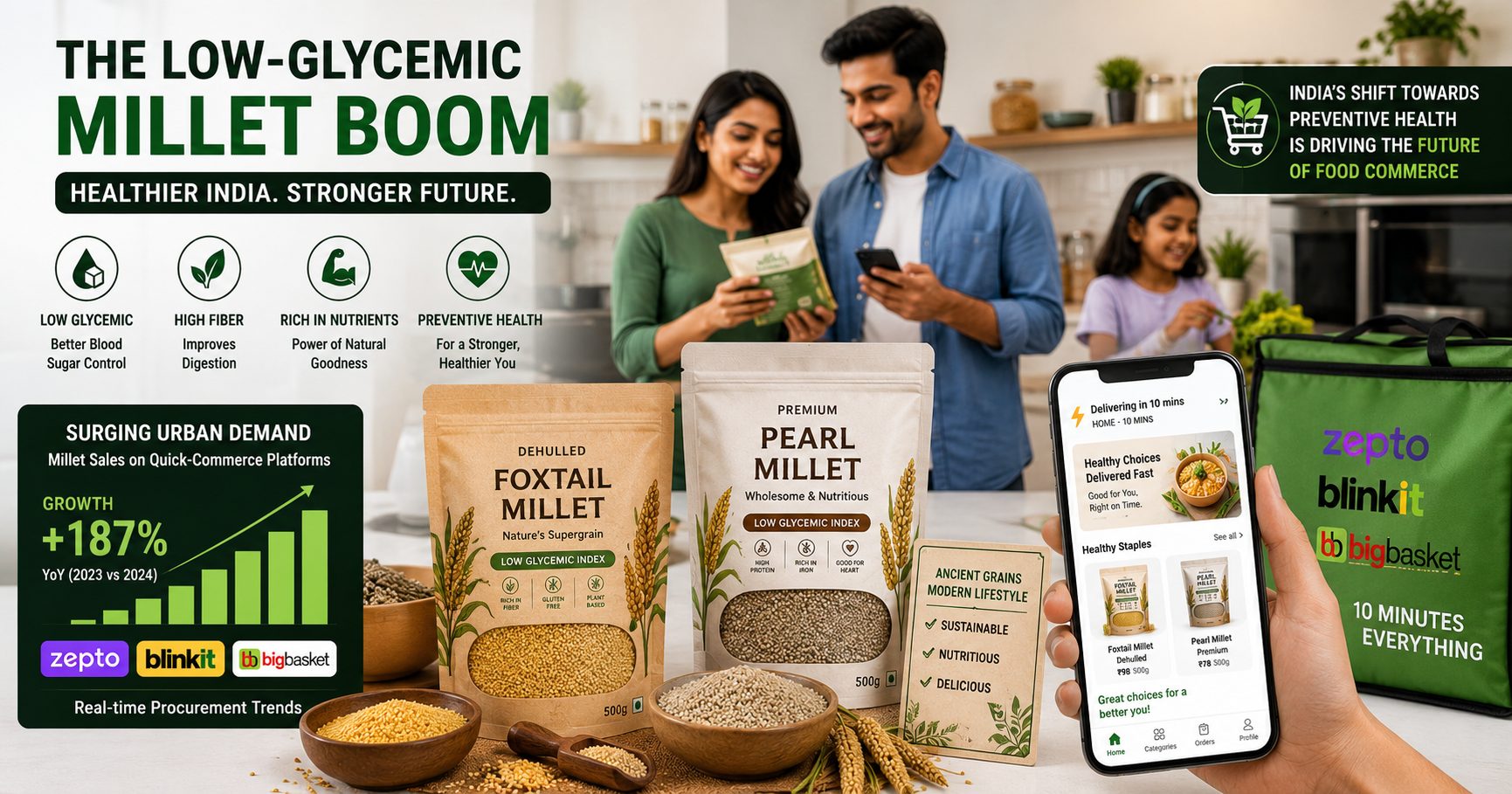
Real-time procurement trends across leading quick-commerce platforms indicate a structural rise in urban demand for processed ancient grains, particularly dehulled foxtail millet and pearl millet. Driven by growing health awareness, blood sugar management concerns, and preventative nutrition adoption, consumers are increasingly shifting from refined staples toward low-glycemic millet-based alternatives, creating significant opportunities across the agricultural value chain.
The Low-Glycemic Quick-Commerce Boom: Why Millets Are Emerging as India's Fastest-Growing Health Food Opportunity
Introduction
A major shift is quietly reshaping India's food economy.
For decades, urban food consumption was dominated by refined grains, processed convenience foods, and calorie-focused purchasing decisions. Today, however, a growing segment of consumers is prioritizing metabolic health, blood sugar management, weight control, digestive wellness, and preventative nutrition.
Real-time procurement activity across major quick-commerce platforms such as Zepto, Blinkit, and BigBasket points toward an accelerating demand for processed ancient grains, particularly dehulled foxtail millet and pearl millet.
This is not a short-term dietary trend.
It represents a structural transformation in urban food purchasing behavior that could redefine opportunities for farmers, processors, FPOs, food brands, exporters, and agripreneurs.
The Problem with India's Traditional Urban Diet
Rising Lifestyle Health Concerns
Urban India is witnessing increasing awareness around:
- Blood sugar management
- Obesity prevention
- Digestive health
- Metabolic disorders
- Preventative nutrition
Consumers are becoming more conscious of how everyday food choices influence long-term health outcomes.
The Decline of Refined-Carbohydrate Dominance
Traditional consumption patterns centered around highly processed grains are increasingly being questioned by health-conscious consumers.
Modern buyers now evaluate products based on:
- Glycemic response
- Fiber content
- Protein levels
- Nutritional density
- Functional health benefits
This shift is creating demand for alternative grain categories.
Why Millets Are Benefiting
Understanding the Low-Glycemic Advantage
Many millet varieties offer nutritional characteristics that align with modern health priorities.
Consumers perceive millets as:
- Nutrient-rich
- Fiber-dense
- Traditionally rooted
- Better suited for balanced diets
- Compatible with preventative wellness goals
This perception is driving repeat purchases.
Why Foxtail Millet and Pearl Millet Stand Out
Among various millet categories, processed foxtail millet and pearl millet have gained significant traction because they are:
- Easy to cook
- Versatile in recipes
- Suitable for urban lifestyles
- Available in ready-to-use formats
Convenience has become as important as nutrition.
The Quick-Commerce Effect
Health Foods Are Now Instantly Accessible
Historically, millet products were largely confined to specialty stores and niche organic outlets.
Quick-commerce platforms have changed the equation.
Consumers can now access millet products within minutes.
This has dramatically reduced purchasing friction.
Visibility Drives Consumption
Digital platforms actively influence purchasing decisions through:
- Product recommendations
- Health-focused categories
- Personalized search results
- Subscription purchases
- Promotional campaigns
As millet products gain visibility, demand continues to expand.
The Preventative Health Revolution
Consumers Are Thinking Long-Term
A significant behavioral change is underway.
Consumers are increasingly purchasing food not only to satisfy hunger but also to support future health outcomes.
This includes:
- Blood sugar awareness
- Weight management
- Gut health
- Cardiovascular wellness
- Functional nutrition
Food is increasingly being viewed as a health investment.
The Mainstreaming of Wellness
What was once limited to fitness enthusiasts has entered mainstream households.
Families, working professionals, and senior citizens are now actively exploring healthier grain alternatives.
This broadens the market significantly.
Opportunities Across the Agricultural Value Chain
For Farmers
Growing urban demand can create:
- Higher market stability
- Better procurement opportunities
- Diversification benefits
- Increased millet cultivation incentives
Farmers positioned within quality-focused millet supply chains may benefit significantly.
For FPOs
Farmer Producer Organizations can create value through:
- Aggregation
- Cleaning and grading
- Contract cultivation
- Traceability systems
- Direct market linkages
Organized supply chains will be critical as demand scales.
For Processors
The largest value capture may occur at the processing stage.
Opportunities include:
- Dehulled millet products
- Ready-to-cook formulations
- Millet flour blends
- Breakfast products
- Convenience food solutions
- Functional nutrition products
Value addition can substantially improve margins.
The Emergence of a Premium Millet Economy
From Commodity to Consumer Brand
Historically, millets were often treated as low-value crops.
Today, they are increasingly positioned as premium wellness products.
This changes the economics dramatically.
Consumers are willing to pay more for:
- Convenience
- Packaging
- Traceability
- Nutritional positioning
- Trusted brands
Brand-Led Growth
The next phase of millet expansion will likely be driven by:
- D2C brands
- Quick-commerce platforms
- Health-focused retailers
- Functional food companies
Agriculture is becoming more connected to consumer branding than ever before.
Strategic Implications for Indian Agriculture
Demand Is Becoming Health-Led
Future agricultural demand growth may increasingly emerge from:
- Functional foods
- Preventative nutrition
- Specialized diets
- Health-conscious consumers
Millets sit directly at the intersection of all four trends.
The Opportunity Beyond Domestic Markets
As health awareness rises globally, millet-based products may also gain traction in export markets focused on wellness and specialty foods.
This creates long-term growth potential beyond India.
Conclusion
The rapid rise in urban purchases of processed foxtail millet and pearl millet through quick-commerce channels signals more than a temporary consumer preference. It reflects a structural shift toward preventative health, nutritional awareness, and functional food consumption.
For farmers, FPOs, processors, food brands, and agripreneurs, the message is clear: millets are transitioning from traditional crops to modern health assets. Those who build strong supply chains, value-added products, and trusted consumer brands will be best positioned to benefit from the next phase of agricultural demand growth.
Register on https://www.agriboz.com
AGRIBOZ CTA
Explore the Agriculture Intelligence Platform of Bharat - AGRIBOZ
Stay informed about emerging consumer trends, agricultural market intelligence, processing opportunities, export developments, value-addition strategies, workshops, and ecosystem partnerships shaping the future of Indian agriculture.
Explore the Agriculture Intelligence Platform of Bharat - AGRIBOZ
Access agricultural intelligence, market trend analysis, millet opportunities, agribusiness insights, workshops, ecosystem networking, and growth strategies designed to help stakeholders capitalize on emerging agricultural demand trends.
Register on https://www.agriboz.com
Q1. What is driving the increase in millet consumption? Growing awareness of preventative health, blood sugar management, nutrition, and wellness is encouraging consumers to explore millet-based alternatives.
Q2. Why are foxtail millet and pearl millet gaining popularity? These millets offer nutritional benefits, convenience, versatility, and compatibility with modern urban lifestyles.
Q3. How is quick-commerce influencing millet demand? Platforms such as Zepto, Blinkit, and BigBasket improve product accessibility, visibility, and purchasing convenience, accelerating consumer adoption.
Q4. What opportunities does this trend create for farmers? Rising demand may support greater market opportunities, diversification, and stronger procurement ecosystems for millet producers.
Q5. How can processors benefit? Processors can create higher-value products including ready-to-cook foods, flour blends, breakfast products, and functional nutrition offerings.
Q6. Is this a short-term trend? Current demand patterns suggest a broader shift toward health-focused food purchasing rather than a temporary dietary fad.