Drought-Resilient Sowing Input Deficit: Why FPOs and Corporate Farms Are Building Massive Organic Input Buffers
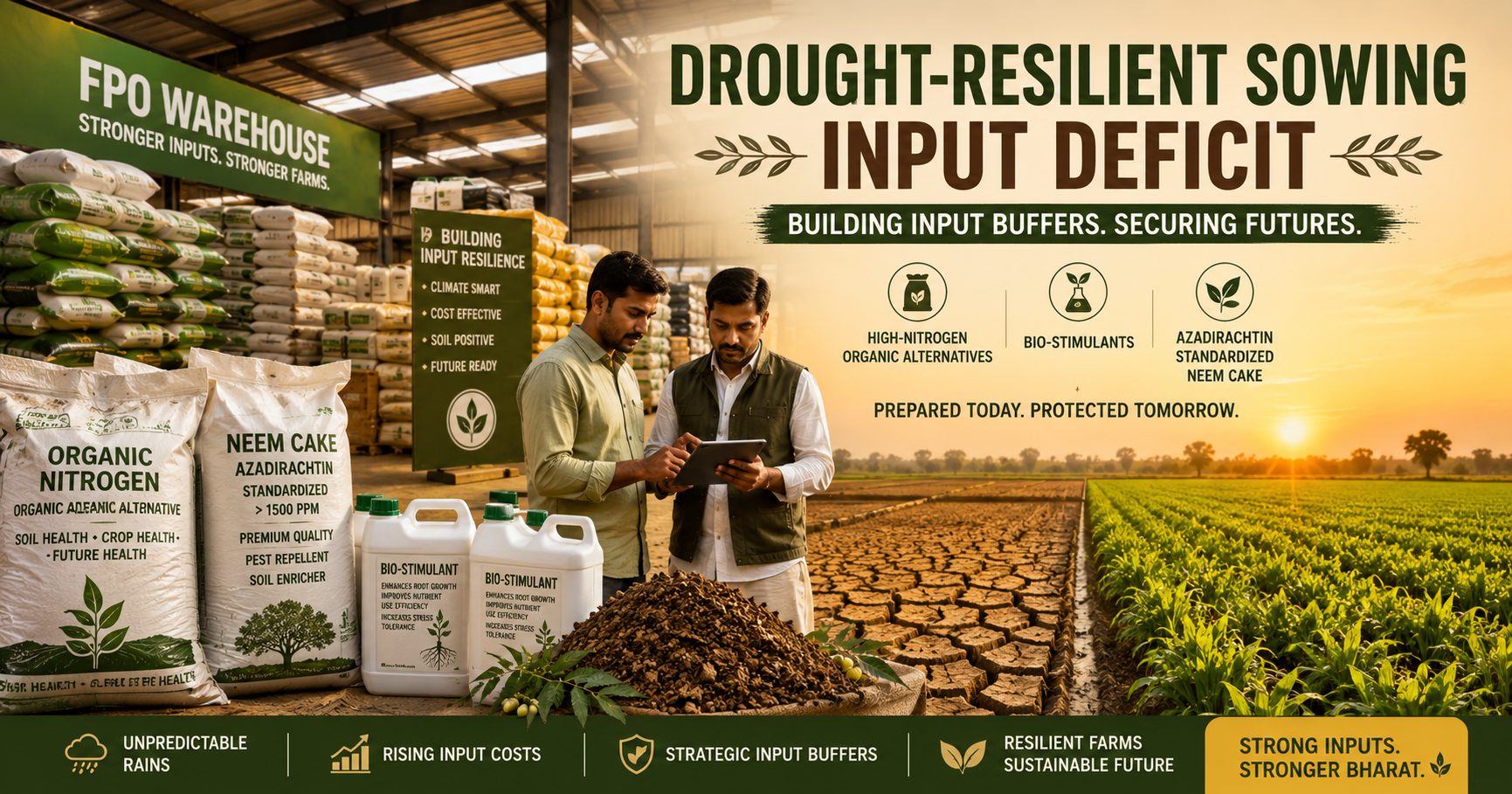
As climate uncertainty disrupts sowing decisions and chemical fertilizer prices remain volatile, corporate farming clusters and large Farmer Producer Organizations (FPOs) are increasingly stockpiling high-nitrogen organic inputs, bio-stimulants, and azadirachtin-standardized neem cakes. This strategic shift is creating a new agricultural input economy focused on resilience, soil health, risk mitigation, and sustainable productivity.
Drought-Resilient Sowing Input Deficit: Why FPOs and Corporate Farms Are Building Massive Organic Input Buffers
Introduction
Agriculture is entering an era where rainfall uncertainty has become one of the biggest operational risks for farmers, agribusinesses, and institutional farming operations.
Across India and many global agricultural regions, delayed monsoons, uneven precipitation patterns, and prolonged dry spells are forcing farming organizations to rethink input planning strategies.
In response, large Farmer Producer Organizations (FPOs), corporate farming clusters, and progressive agricultural enterprises are aggressively building inventories of high-nitrogen organic alternatives, bio-stimulants, and azadirachtin-standardized neem cakes.
What appears to be a procurement trend is actually a deeper transformation in agricultural risk management.
The Emerging Sowing Input Deficit Challenge
Rainfall Signals Are Becoming Less Reliable
Traditional sowing calendars depended heavily on predictable weather patterns.
Today, producers face:
- Delayed monsoon onset
- Uneven rainfall distribution
- Mid-season drought stress
- Sudden weather reversals
- Increased climate variability
This uncertainty directly impacts fertilizer planning and nutrient management.
Chemical Input Volatility
Farm managers are increasingly concerned about:
- Rising fertilizer costs
- Supply chain disruptions
- Global commodity fluctuations
- Energy-linked fertilizer pricing
As a result, organizations are looking for alternatives that reduce dependency on conventional chemical inputs.
Why Large Farming Operations Are Creating Input Buffers
Risk Mitigation Strategy
Input buffers ensure that farms remain operational even when supply chains become unstable.
Strategic reserves help organizations:
- Avoid procurement delays
- Reduce price shocks
- Maintain sowing schedules
- Ensure nutrient availability
Predictable Crop Planning
Large-scale agricultural enterprises require consistency.
Buffer inventories allow managers to make decisions based on agronomic needs rather than market shortages.
Climate Adaptation
Organic nutrient sources and bio-based inputs are increasingly viewed as resilience tools that help crops withstand environmental stress.
High-Nitrogen Organic Alternatives Are Gaining Attention
Why Nitrogen Remains Critical
Nitrogen continues to be one of the most important nutrients influencing:
- Vegetative growth
- Chlorophyll production
- Biomass accumulation
- Yield potential
However, excessive dependence on synthetic nitrogen creates economic and environmental concerns.
Rising Interest in Organic Nitrogen Sources
Large buyers are increasingly evaluating:
- Compost-based nutrient products
- Organic manure concentrates
- Fermented nutrient formulations
- Plant-derived nutrient amendments
These alternatives support integrated nutrient management approaches.
Long-Term Soil Benefits
Unlike short-term nutrient delivery systems, many organic inputs contribute to:
- Improved soil structure
- Better water retention
- Enhanced microbial activity
- Increased nutrient cycling
These characteristics become particularly valuable during drought periods.
Bio-Stimulants Are Moving Into Mainstream Agriculture
What Are Bio-Stimulants?
Bio-stimulants are products designed to improve plant performance through physiological enhancement rather than direct nutrient supply.
They are increasingly used to:
- Improve root development
- Enhance nutrient efficiency
- Support stress tolerance
- Improve crop vigor
Why Demand Is Rising
Corporate farms and FPOs are adopting bio-stimulants because they may help crops cope with:
- Moisture stress
- Heat stress
- Nutrient inefficiencies
- Establishment challenges
Strategic Procurement Trends
Large organizations are increasingly securing inventory before sowing seasons to avoid shortages and maintain continuity.
Azadirachtin-Standardized Neem Cakes: A High-Demand Category
The Evolution of Neem-Based Inputs
Traditional neem cake has long been valued in agriculture.
However, standardized neem products are gaining popularity because they offer:
- Consistent quality
- Better traceability
- Reliable performance parameters
- Professional procurement suitability
Why Standardization Matters
Large-scale buyers increasingly prefer products with measurable specifications.
Azadirachtin-standardized neem cakes provide:
- Quality assurance
- Procurement confidence
- Better inventory planning
- Standardized farm protocols
Benefits Beyond Nutrition
Neem cake is often incorporated into integrated farming systems due to its multi-functional role in soil and crop management programs.
How FPOs Are Responding
Collective Procurement Models
Farmer Producer Organizations are leveraging scale advantages to:
- Purchase inputs in bulk
- Negotiate better pricing
- Build shared inventories
- Improve supply security
Building Climate Resilience
Many FPOs now view input planning as a strategic resilience activity rather than a routine procurement exercise.
Strengthening Member Services
Input availability has become a major factor in member satisfaction and retention within producer organizations.
Opportunities for Agripreneurs
Organic Input Manufacturing
Demand is creating opportunities for businesses focused on:
- Organic nutrient products
- Bio-stimulant production
- Neem-based agricultural inputs
- Sustainable crop nutrition solutions
Regional Supply Networks
Local manufacturing and distribution networks can reduce logistics costs and improve availability.
Quality Assurance Services
As procurement becomes more sophisticated, demand is increasing for:
- Testing services
- Certification support
- Traceability systems
- Standardization frameworks
The Future of Agricultural Input Procurement
The next decade will likely be defined by four major procurement priorities:
Resilience
Farms will prioritize input security.
Sustainability
Environmentally responsible products will gain market share.
Predictability
Organizations will seek stable supply chains.
Performance
Input purchases will increasingly be linked to measurable field outcomes.
The organizations that successfully balance these priorities will gain a competitive advantage.
Conclusion
The growing demand for high-nitrogen organic alternatives, bio-stimulants, and azadirachtin-standardized neem cakes reflects a fundamental shift in agricultural thinking.
Corporate farming clusters and FPOs are no longer focusing solely on input costs. They are investing in resilience, soil health, procurement security, and climate adaptation.
As drought risks and fertilizer volatility continue to shape agricultural economics, strategic input buffers are becoming essential components of modern farming systems.
Register on https://www.agriboz.com and stay ahead of emerging opportunities in climate-resilient agriculture, sustainable inputs, and next-generation agribusiness models.
CTA
Explore the Agriculture Intelligence Platform of Bharat - AGRIBOZ
Gain access to agricultural market intelligence, emerging input trends, agribusiness opportunities, workshops, expert networks, and ecosystem partnerships designed for farmers, FPOs, agripreneurs, and agricultural enterprises.
Register on https://www.agriboz.com and become part of India's future-ready agriculture ecosystem.
FAQ
What is a drought-resilient input strategy?
It is an agricultural planning approach that focuses on securing inputs and improving crop resilience against rainfall uncertainty and climate stress.
Why are FPOs building input buffers?
FPOs use input buffers to reduce supply disruptions, manage price volatility, and ensure timely access to agricultural inputs.
What are bio-stimulants?
Bio-stimulants are products that enhance plant growth, nutrient efficiency, and stress tolerance through biological or physiological mechanisms.
Why are standardized neem cakes becoming popular?
Large buyers prefer standardized products because they offer consistent quality, traceability, and procurement confidence.
How do organic inputs support drought resilience?
Many organic inputs improve soil structure, microbial activity, and water-holding capacity, helping crops better withstand dry conditions.
How can AGRIBOZ help agricultural businesses?
AGRIBOZ provides intelligence, networking, training, and business development opportunities across the agriculture value chain.
Explore the Agriculture Intelligence Platform of Bharat - AGRIBOZ
Stay informed about emerging agricultural input trends, climate-resilient farming opportunities, sustainable crop nutrition solutions, FPO innovations, and agribusiness intelligence.
Register on https://www.agriboz.com and unlock opportunities in the future of agriculture.
Q1. What is causing the sowing input deficit? Climate uncertainty, delayed rainfall patterns, and rising fertilizer costs are creating procurement challenges across agricultural regions.
Q2. Why are corporate farms increasing purchases of organic inputs? They are seeking greater resilience, supply security, and long-term soil health benefits.
Q3. What role do bio-stimulants play in modern agriculture? Bio-stimulants help improve crop vigor, nutrient utilization, root growth, and stress tolerance.
Q4. What is azadirachtin-standardized neem cake? It is a quality-standardized neem-based agricultural input with measurable active ingredient specifications.
Q5. How are FPOs benefiting from bulk procurement? Bulk procurement helps reduce costs, improve availability, and strengthen member support services.
Q6. Is this trend creating business opportunities? Yes. Demand is increasing for organic fertilizers, bio-stimulants, neem products, testing services, and sustainable input supply chains.