Corporate Water Alignment: How Multinational Equipment Manufacturers Are Restoring Community Ponds to Secure Dairy Outgrower Water Resources
As groundwater depletion threatens dairy production across rural regions, multinational equipment manufacturers are increasingly supporting community pond restoration projects. This corporate water alignment strategy helps recharge aquifers, strengthen dairy outgrower ecosystems, improve climate resilience, and create long-term sustainability for agriculture-dependent communities.
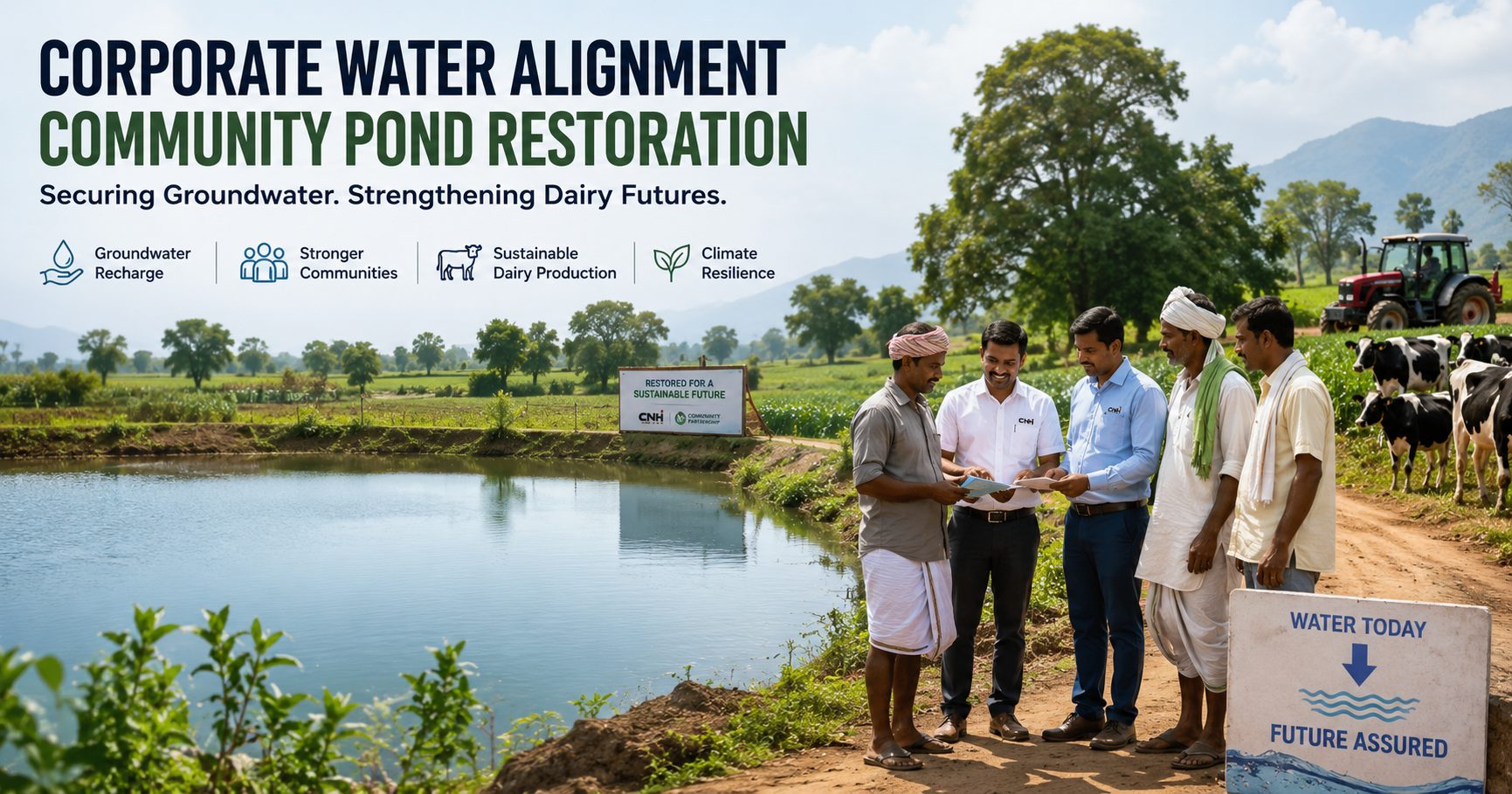
Corporate Water Alignment: How Multinational Equipment Manufacturers Are Restoring Community Ponds to Secure Dairy Outgrower Water Resources
Introduction
Water has become one of the most critical resources determining the future of agriculture and dairy production. Across many regions, groundwater levels are declining due to over-extraction, erratic rainfall patterns, and increasing agricultural demand. Dairy outgrower networks, which depend heavily on reliable water availability for fodder cultivation and livestock management, are particularly vulnerable.
Recognizing this challenge, multinational agricultural equipment manufacturers are beginning to align sustainability investments with local water security initiatives. Community pond restoration has emerged as a practical and scalable solution that benefits both rural communities and agricultural supply chains.
The Growing Groundwater Crisis in Dairy Regions
Why Dairy Production Depends on Water Security
Dairy farming requires consistent water access for:
- Livestock hydration
- Green fodder production
- Silage preparation
- Cleaning and sanitation
- Milk processing activities
When groundwater levels decline, production costs rise and farm productivity suffers.
The Hidden Risk for Corporate Supply Chains
Many agricultural manufacturers depend on healthy farming ecosystems. Reduced water availability can lead to:
- Lower farm profitability
- Reduced equipment utilization
- Supply chain instability
- Rural economic stress
- Increased climate-related operational risks
As a result, water stewardship is becoming a strategic business priority rather than a standalone CSR activity.
What Is Corporate Water Alignment?
Moving Beyond Traditional CSR
Corporate water alignment refers to investments that simultaneously create environmental, social, and business value.
Instead of isolated donations, companies support projects that:
- Improve watershed health
- Recharge groundwater
- Strengthen farming communities
- Enhance climate resilience
- Support long-term agricultural productivity
Community pond restoration is one of the most visible examples of this approach.
Why Pond Restoration Matters
Traditional ponds act as natural recharge structures.
Benefits include:
- Rainwater harvesting
- Groundwater replenishment
- Reduced runoff losses
- Improved biodiversity
- Enhanced drought resilience
Restoring neglected ponds can significantly improve local water availability over time.
How Multinational Equipment Manufacturers Are Contributing
Supporting Regional Water Infrastructure
Large agricultural equipment companies increasingly collaborate with:
- Village communities
- NGOs
- Farmer producer organizations
- Watershed experts
- Local governments
These partnerships help identify degraded water bodies and restore them through scientific planning.
Common Restoration Activities
Projects often include:
- Desilting ponds
- Strengthening embankments
- Creating recharge trenches
- Improving drainage channels
- Planting native vegetation
- Installing water-monitoring systems
The goal is to maximize water retention and aquifer recharge.
Benefits for Dairy Outgrower Ecosystems
Improved Fodder Production
Reliable water availability supports:
- Multi-season fodder cultivation
- Higher biomass yields
- Better forage quality
- Reduced dependence on purchased feed
Greater Livestock Productivity
Water-secure farms typically experience:
- Improved animal health
- Better milk yields
- Reduced heat stress
- Lower production disruptions
Enhanced Farmer Income Stability
When water availability improves, farmers can:
- Maintain production during dry periods
- Diversify crops
- Reduce irrigation costs
- Improve profitability
This strengthens the entire dairy value chain.
Environmental and Climate Benefits
Groundwater Recharge
Restored ponds increase infiltration rates and help replenish underground water reserves.
Reduced Flooding and Runoff
Healthy water bodies capture excess rainfall and reduce downstream flooding risks.
Biodiversity Recovery
Community ponds support:
- Birds
- Pollinators
- Aquatic organisms
- Native vegetation
This contributes to healthier agricultural ecosystems.
Climate Adaptation
Water storage infrastructure helps communities withstand:
- Droughts
- Irregular monsoons
- Heat waves
- Water shortages
Challenges to Successful Implementation
Community Participation
Long-term success requires local ownership and maintenance.
Monitoring Impact
Organizations must track:
- Groundwater levels
- Water storage capacity
- Agricultural productivity
- Community benefits
Scaling Across Regions
Every watershed has unique ecological conditions. Restoration models must be adapted to local geography and rainfall patterns.
The Future of Corporate Water Stewardship
From Compliance to Regeneration
Leading companies are increasingly moving toward regenerative approaches that restore natural resources rather than simply reducing environmental harm.
Building Resilient Agricultural Landscapes
Future investments may include:
- Watershed development
- Farm ponds
- Rainwater harvesting systems
- Precision irrigation
- Climate-smart agriculture programs
Together, these initiatives can create stronger agricultural ecosystems and more resilient rural economies.
Conclusion
Community pond restoration represents a powerful example of how corporate sustainability efforts can deliver meaningful environmental and economic outcomes. By supporting groundwater recharge and improving water security in dairy outgrower regions, multinational equipment manufacturers can help safeguard agricultural productivity while strengthening community resilience.
As climate and water challenges continue to intensify, collaborative water stewardship will become increasingly important for the future of agriculture.
Register on https://www.agriboz.com
CTA
Explore the Agriculture Intelligence Platform of Bharat - AGRIBOZ
Discover agricultural sustainability insights, water stewardship innovations, climate-smart farming opportunities, expert-led workshops, rural development initiatives, and emerging agribusiness trends.
Register on https://www.agriboz.com
Explore the Agriculture Intelligence Platform of Bharat - AGRIBOZ
Connect with farmers, agribusiness leaders, sustainability professionals, trainers, innovators, and agricultural entrepreneurs driving the future of resilient agriculture.
Register on https://www.agriboz.com
Q1. What is corporate water alignment?
Corporate water alignment is a sustainability strategy where businesses invest in water conservation and watershed projects that benefit communities while supporting long-term agricultural and supply-chain resilience.
Q2. Why are community ponds important for groundwater recharge?
Community ponds capture rainwater and allow it to infiltrate the soil, helping replenish underground aquifers and improve local water availability.
Q3. How does pond restoration help dairy farmers?
Restored ponds improve water access for livestock and fodder production, reducing drought-related risks and supporting stable milk production.
Q4. Why are multinational equipment manufacturers investing in water stewardship?
Healthy farming communities contribute to stronger agricultural ecosystems, more resilient supply chains, and long-term sustainability goals.
Q5. What environmental benefits result from pond restoration?
Benefits include groundwater recharge, biodiversity conservation, flood mitigation, improved water retention, and greater climate resilience.
Q6. Can pond restoration improve farmer incomes?
Yes. Improved water security often leads to better crop yields, reduced irrigation costs, more reliable dairy production, and higher overall farm profitability.