How to Build a Funding Ready Farm Profile?
Learn how to create a professional funding-ready farm profile that attracts investors, government schemes, CSR partnerships, agro tourism opportunities, and private funding for long-term agricultural growth.
AGRIBOZ Team
Verified Expert Author
How to Build a Funding Ready Farm Profile
India’s agriculture industry is rapidly transforming into a business-driven ecosystem powered by government schemes, CSR partnerships, agri startups, agro tourism, food processing, climate funding, and sustainable farming initiatives.
However, one of the biggest reasons why farmers fail to secure funding is because they are not professionally prepared.
A good farm alone is not enough anymore.
Investors, banks, CSR organizations, NGOs, and even government departments now demand clarity, documentation, planning, scalability, and long-term vision before they support any agricultural project.
A funding-ready farm profile transforms a traditional farm into a professional agricultural enterprise that appears credible, scalable, and investment worthy.
This guide explains step-by-step how farmers, landowners, agro tourism operators, food forest developers, and rural entrepreneurs can build a professional funding-ready farm profile.
If you want to explore practical agricultural business systems, agro tourism opportunities, future-ready farming models, and hands-on agricultural workshops, visit:
What is a Funding Ready Farm Profile?
A funding-ready farm profile is a structured presentation of your farm that explains:
• Who you are
• What your farm does
• What crops or systems you operate
• Your land and infrastructure details
• Your revenue model
• Your long-term vision
• Your funding requirements
• Your projected impact and returns
It acts as a business profile, investor presentation, farm proposal, grant document, and partnership introduction all in one.
The future of agriculture will increasingly reward farmers who can professionally communicate their vision and business potential.
Why Every Farmer Needs a Professional Farm Profile
Without a professional farm profile:
• Investors lose confidence
• CSR organizations struggle to understand the project
• Government approvals become difficult
• Banks view the farm as high risk
• Private funders avoid the opportunity
With a funding-ready farm profile:
• Your farm looks professional
• Trust increases
• Funding opportunities improve
• Government schemes become easier to access
• Partnerships become easier to close
• Your brand value grows
Modern agriculture is no longer only about cultivation.
It is increasingly becoming a business ecosystem driven by presentation, planning, and credibility.
Step 1: Define Your Farm Identity
The first step is building a clear identity for your farm.
Basic information required includes:
• Farm name
• Owner name
• Mobile number
• Email address
• Farm location
• Total land area
• Google Maps location
• Social media links
• Website link if available
Your farm should feel like a real business brand rather than just a piece of land.
Professional identity creates stronger trust.
Step 2: Define Your Farm Vision Clearly
Most farmers fail because they cannot clearly explain what they are building.
You must answer:
• What problem is your farm solving?
• What is your long-term vision?
• Why should someone invest in your farm?
• How will your farm grow over time?
Examples of Strong Farm Visions
Food Forest Farm:
“To build a regenerative multilayer food forest model that improves farmer income while restoring biodiversity.”
Agro Tourism Farm:
“To create a sustainable rural tourism destination connecting urban families with farming experiences.”
Organic Farm:
“To produce healthy chemical-free food while educating communities about sustainable farming.”
Funding follows clarity.
The clearer your vision becomes, the easier it becomes to attract opportunities.
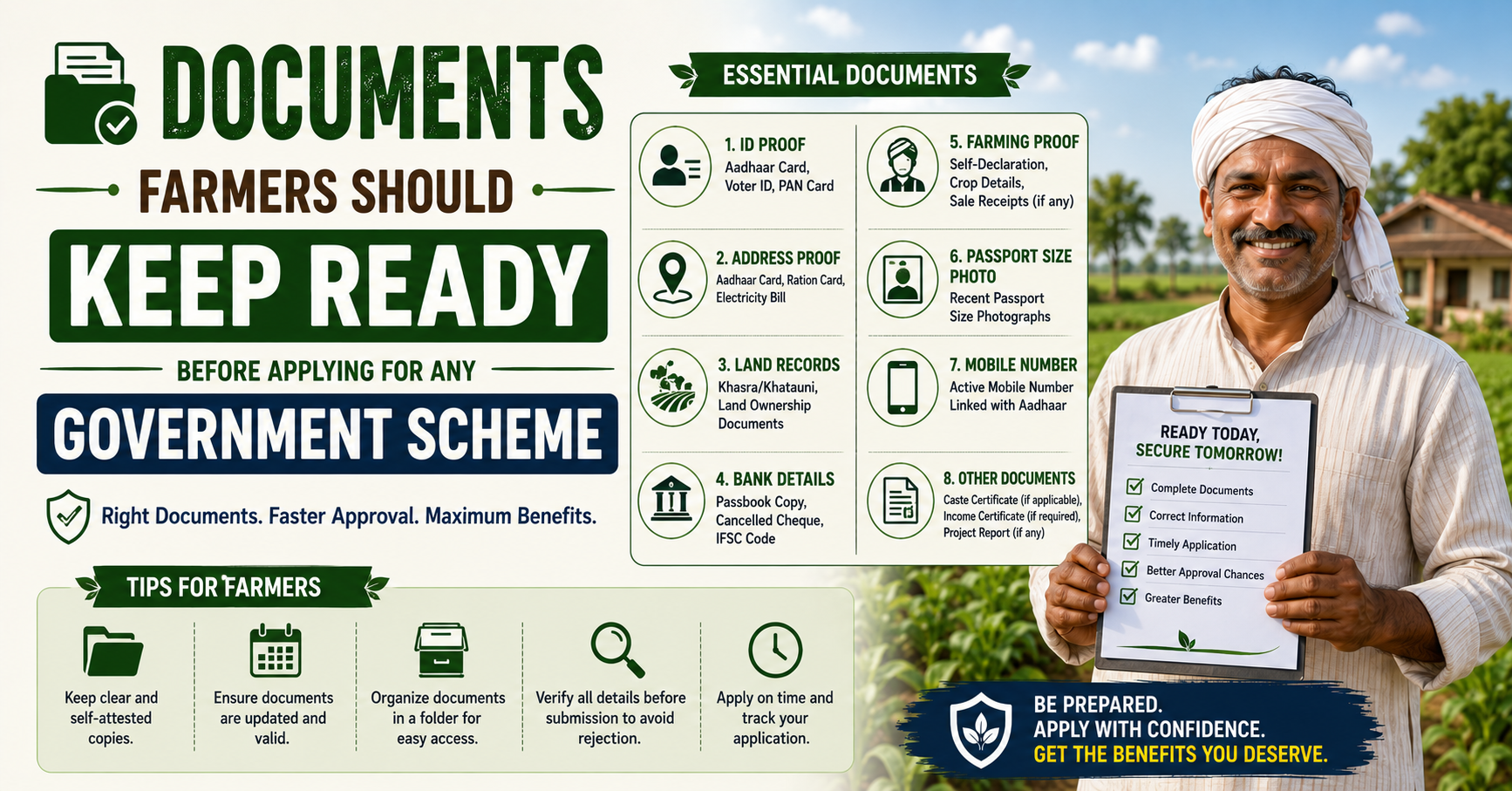
Step 3: Organize Land Documentation
No serious funding can happen without proper land clarity.
Important documents include:
• Land registry papers
• Lease agreement if leased
• Khasra or Khatauni documents
• GPS coordinates
• Farm photographs
• Drone images if possible
Investors and banks require confidence that the project is legally secure and professionally managed.
Step 4: Create an Infrastructure Report
Your farm profile should clearly explain the infrastructure available on the land.
Water Infrastructure
• Borewell
• Pond
• Canal access
• Rainwater harvesting
• Drip irrigation
Farm Structures
• Polyhouse
• Shade net
• Storage room
• Dairy shed
• Training hall
• Farm stay cottages
Energy Systems
• Solar panels
• Biogas system
• Electricity connection
Infrastructure creates long-term business value and improves investor confidence significantly.
Step 5: Build a Proper Crop Plan
Funding agencies want clear production planning.
Your farm profile should mention:
• What crops you grow
• Total area under cultivation
• Expected annual production
• Selling method
• Seasonal cycles
• Farming techniques used
Modern agriculture is becoming increasingly data-driven and planning-oriented.
Step 6: Develop Multiple Revenue Streams
Modern farms should never depend on only one source of income.
Diversified farms attract more funding and reduce business risk.
Best Revenue Streams for Modern Farms
• Fruit farming
• Vegetable cultivation
• Dairy business
• Agro tourism
• Farm workshops
• Food processing
• Seed production
• Online farming courses
• Farm stays
• Direct-to-consumer food sales
This is one of the biggest shifts happening in Indian agriculture.
The future farm is becoming a multi-income ecosystem.
If you want to explore agro tourism systems, agricultural workshops, diversified farming models, and future-focused agricultural business opportunities, visit:
Step 7: Create Financial Projections
This is one of the most important sections of your farm profile.
You must estimate:
• Initial setup costs
• Monthly expenses
• Expected revenue
• Profit margins
• Break-even timeline
Most funding agencies want to understand whether the project is financially sustainable.
Professional financial projections create stronger confidence.
Step 8: Show Environmental and Social Impact
Modern funding is becoming increasingly impact-driven.
Especially in CSR, sustainability, and climate-focused investments, your farm must demonstrate measurable impact.
Social Impact Examples
• Farmer employment generation
• Women empowerment
• Rural youth engagement
• Skill development workshops
Environmental Impact Examples
• Water conservation
• Soil restoration
• Tree plantation
• Chemical-free farming
• Carbon reduction
The future of agricultural funding will increasingly prioritize sustainability and measurable impact.
Step 9: Build a Strong Farm Story
People invest emotionally before financially.
Your farm story should explain:
• Why you started farming
• Your mission
• Your struggles
• Your transformation journey
• Your future vision
A powerful founder story increases trust and emotional connection.
Strong storytelling often becomes a major credibility advantage.
Step 10: Add Visual Proof
Professional visuals instantly improve credibility.
Important visuals to include:
• Farm photographs
• Drone shots
• Water systems
• Plantation visuals
• Workshop images
• Before-and-after transformation photos
Visual presentation can significantly influence investor and customer perception.
Step 11: Build a Digital Presence
A funding-ready farm without an online presence looks incomplete.
Must-have digital assets include:
• Professional website
• Google Business Profile
• Instagram page
• YouTube channel
• WhatsApp Business account
Your online presence should showcase:
• Farm updates
• Harvests
• Experiences
• Customer testimonials
• Educational content
Digital visibility is becoming one of the strongest credibility signals in modern agriculture.
If you want to understand practical agricultural branding, agro tourism ecosystems, and future-ready farming systems, explore:
Step 12: Register Your Farm Business Properly
Professional business structures improve funding opportunities.
Recommended structures include:
• Individual farmer setup
• Partnership firm
• LLP
• Private Limited Company
• Farmer Producer Organization (FPO)
For large-scale agro tourism or investment projects, LLP or Private Limited structures are usually preferred.
Step 13: Understand Different Funding Sources
Government Schemes
• NABARD
• National Horticulture Board
• PMFME
• MIDH
CSR Funding
Best for:
• Rural transformation
• Skill development
• Sustainability projects
• Women empowerment
Private Investors
Best for scalable farms with:
• Strong branding
• Multiple revenue streams
• Agro tourism models
• Food processing systems
Different funding sources require different positioning strategies.
Step 14: Create a Professional Pitch Deck
Your pitch deck should include:
• Farm introduction
• Problem statement
• Vision
• Business model
• Revenue streams
• Financial projections
• Funding requirement
• Impact goals
• Expansion strategy
Professional presentation significantly improves partnership and funding opportunities.
Step 15: Build Credibility Signals
Funding follows trust.
Strong credibility signals include:
• Organic certifications
• FSSAI registration
• GST registration
• MSME registration
• Partnerships with institutions
• Media coverage
• Workshop activities
• Customer testimonials
The stronger the trust signals, the easier it becomes to attract investors, customers, and strategic partnerships.
Common Mistakes Farmers Make
• No documentation
• No financial planning
• Only one source of income
• No digital presence
• No professional presentation
• No long-term vision
These mistakes reduce funding confidence significantly.
The Future of Farming is Business + Experience + Impact
The future farmer is not only a cultivator.
The future farmer is:
• A rural entrepreneur
• A land developer
• An experience creator
• A sustainability leader
• A food ecosystem builder
• A climate contributor
The highest-value farms of the future will combine:
• Farming
• Education
• Agro tourism
• Food processing
• Community engagement
• Digital branding
This transformation is already beginning across India.
Final Thoughts
A funding-ready farm profile is no longer optional for serious agricultural growth.
Farmers who document professionally, plan strategically, diversify intelligently, and communicate clearly will attract more opportunities, partnerships, and funding in the coming years.
Whether you are building an organic farm, food forest, dairy ecosystem, agro tourism destination, or sustainable rural enterprise, your farm profile can become the bridge between traditional agriculture and scalable business growth.
The future of agriculture will increasingly reward farms that combine vision, infrastructure, branding, sustainability, and business intelligence.
If you want to explore practical agricultural workshops, agro tourism systems, future farming opportunities, and modern agricultural business ecosystems, visit:
Start building your funding-ready agricultural ecosystem with AgriBoz today.
Tags
Share this article
Ready to Take Action?
Put this knowledge to work on your farm.
Find the right workshop, discover schemes you qualify for, or experience farming firsthand with a retreat.